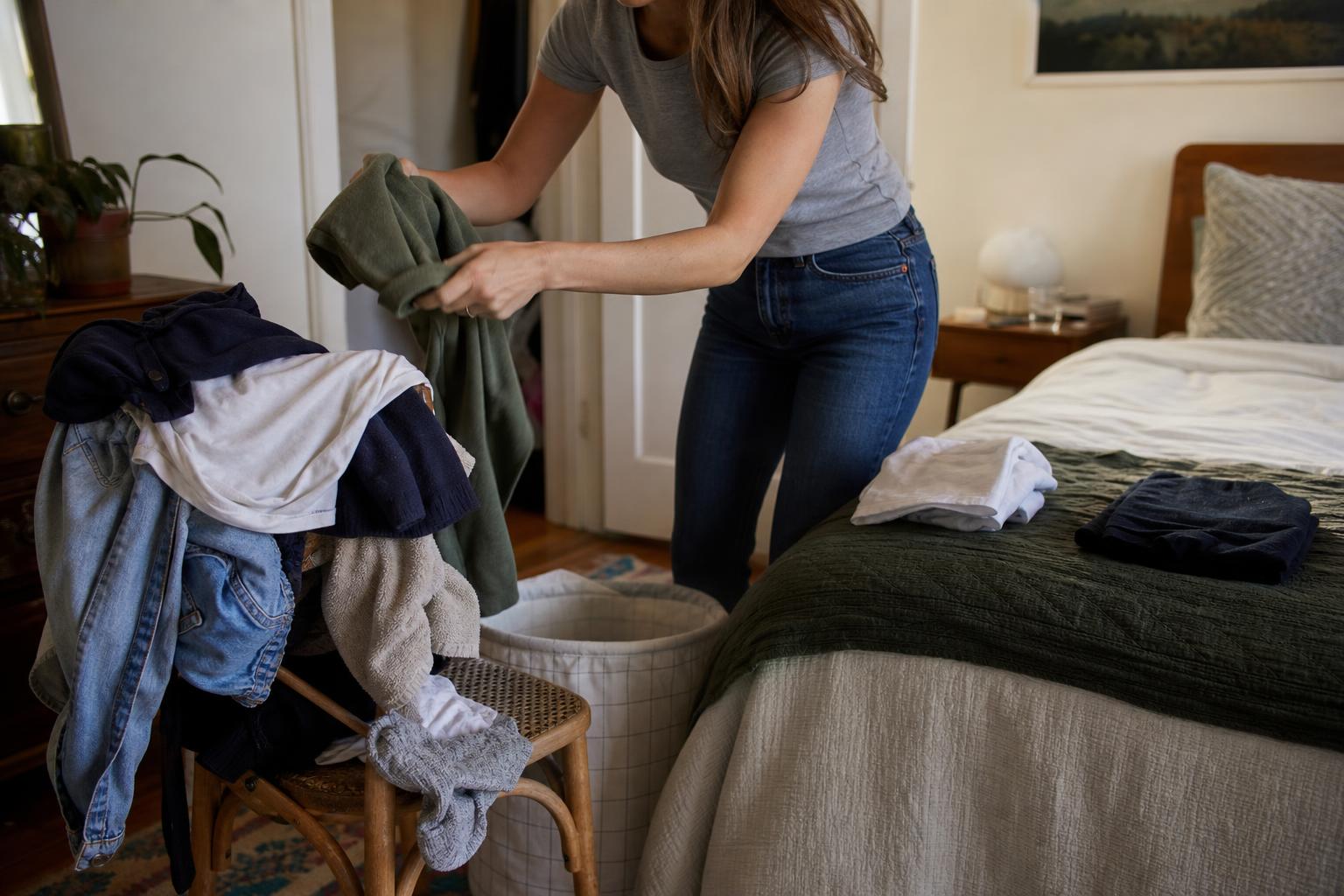
The T-shirt on the chair is rarely just a T-shirt. It asks whether it is dirty, still wearable, or clean enough to put away. Add jeans, a cardigan, yesterday’s socks and a towel, and that one unanswered question becomes a heap that makes the whole bedroom seem harder to deal with.
This is a five-minute bedroom tidy for the moment you are avoiding that decision. Rather than cleaning the room or reorganising the wardrobe, give the clothes on the chair, bed edge or floor three clear destinations. The aim is a bedroom that works properly tonight: somewhere to sit, a clear way to bed, and less clothing underfoot.
Sort the clothes pile without opening a bigger job
- Put a hamper or bag beside the pile. Use the laundry hamper if it is nearby, or bring in a reusable bag or basket. Having it within reach means dirty items can leave the chair straight away.
- Take out the definite washing first. Put in underwear, socks, exercise gear, damp towels, marked clothes and anything you know you have finished wearing. Skip pocket-checking, stain treatment and starting the washing machine.
- Make one spot for clothes you will wear again. Use a hook, one end of the chair, a rail or a shelf. Put jeans, a cardigan or a sleep shirt there only if they are genuinely being kept for another wear.
- Deal only with plainly clean items. Hang up a shirt when its hanger is accessible. Put pyjamas in the drawer if it opens without a wrestling match. If the wardrobe is crowded, fold clean pieces into a single basket or stack instead.
- Restore the chair’s actual job. Once clothing has moved, leave the seat empty, apart from the small wear-again group if the chair is your chosen location. If you need the chair for sitting, use a hook or basket for that group instead.
- Lift the remaining bedroom obstacles. Move shoes, a bag and loose cables off the strip of floor from the door to the bed. Put them in their usual nearby place, or line them together beside the door.
A 9.30 pm clothes-chair decision
You come in after brushing your teeth and see the chair is holding work jeans, a gym top, two clean shirts, a cardigan, socks and a towel. Your tote bag is on the bed, while one sneaker is halfway across the route from the doorway.
Put the gym top, socks and towel into the hamper. The cardigan and jeans are both fine for another wear, so hang the cardigan on the back-of-door hook and fold the jeans over the chair arm. The two clean shirts would require shifting a crowded wardrobe rail, so place them together in a laundry basket for now. Set the tote beside the door and put the sneaker with its pair.
The wardrobe remains crowded and the basket is not a completed laundry task. Still, the bed is clear, the chair has a defined use and you can walk across the room without stepping over something. That is enough for this pass.
Why three destinations are easier than a perfect tidy
A clothes chair becomes frustrating because several kinds of clothing look almost identical in a pile. Fresh washing, clothes worn briefly and dirty laundry all end up in the same place, yet each seems to require a different response. If every garment has to be inspected, folded, hung and stored properly, postponing the task makes sense.
Three destinations cut through that uncertainty. Dirty items go into laundry. Wear-again clothes are kept separate from both laundry and fresh clothes. Clearly clean items can go away quickly, or stay contained until there is time and space to put them away properly. There is no need to decide the future of every item in the wardrobe.
Starting with definite washing is particularly helpful because it is the least ambiguous group. A damp towel or gym top does not need further thought. Removing those pieces also makes the remaining pile smaller, so the jeans and cardigan are easier to see and judge without digging through everything.
Giving wear-again clothes a deliberate location matters because they are often what begin the chair pile. A jumper left there after work creates a convenient landing place for tomorrow’s clothes, a bag, socks and then clean washing. A hook, rail or one controlled section of chair prevents this middle category from spreading across every available surface.
The sequence also avoids bedroom detours. An overfilled wardrobe, a drawer of mismatched socks and a basket of unfolded washing may all need attention eventually. They are separate jobs. In five minutes, the valuable change is restoring the things you use at night: access to the bed, a safe floor route and a chair that is not functioning as a storage unit.
Questions about the clothes that are neither clean nor dirty
Where can wear-again clothes go if I do not have a hook?
Use one contained alternative, such as a single chair arm, a basket, a shelf corner or part of a wardrobe rail. Keep this group separate so it does not mingle with fresh washing.
What if every item on the chair needs a different decision?
Begin with pieces that are easy to identify as laundry, then make only the obvious calls on clean and wear-again clothes. Put uncertain items together in one basket rather than examining each one tonight.
Should clean clothes always be put straight into the wardrobe?
Only if the wardrobe is ready for them and putting them away takes very little effort. A neat, contained stack is preferable to reopening a packed rail and turning this into wardrobe sorting.
What if the chair is the only place I have for repeat-wear clothes?
That can work if the chair is not needed for sitting. Keep only a limited, folded group there and remove dirty laundry promptly, so the chair does not become a mixed clothing heap again.
Stop once the chair is no longer asking questions
Finish when the obvious washing is contained, repeat-wear clothes have one recognised spot and the chair, bed or floor route has been reclaimed for its intended use. Leave the wardrobe shelves, laundry folding and deeper cleaning for another occasion. This bedroom tidy is complete when you can enter the room without facing a pile of undecided clothes.