
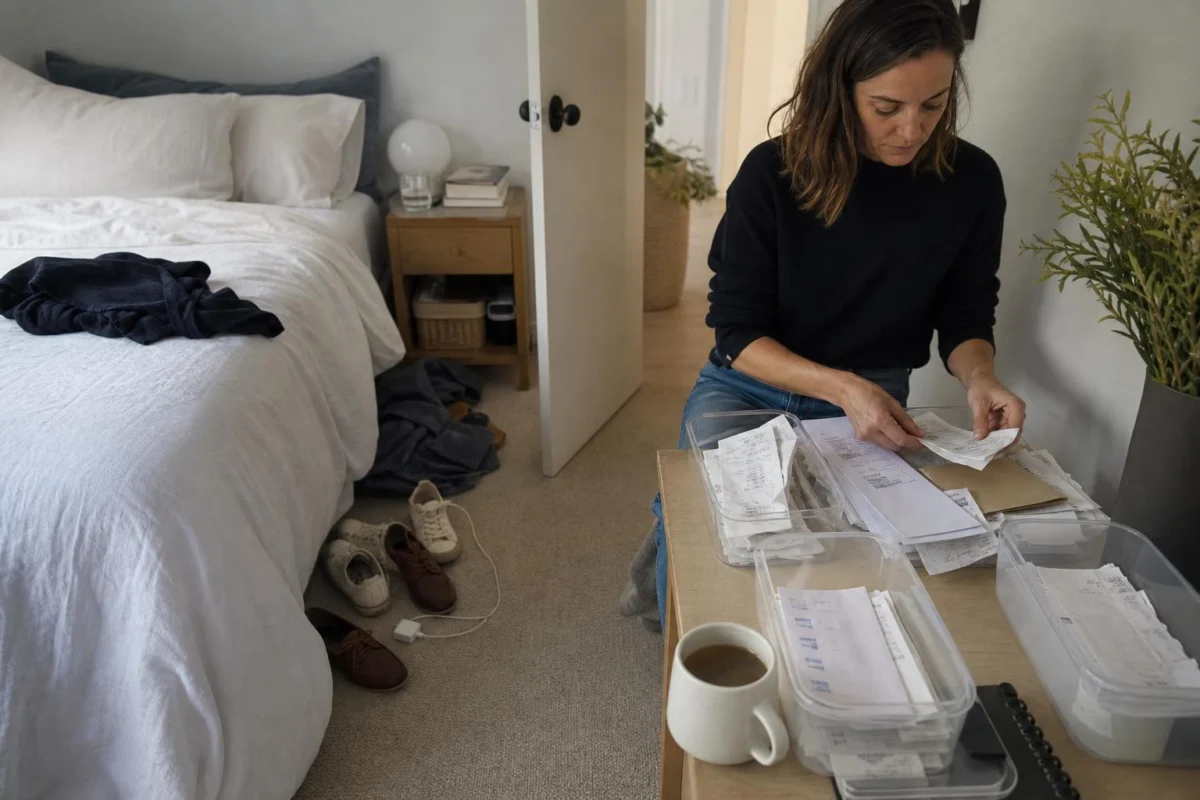
The bedroom door opens, but the narrow strip beside the bed is occupied by shoes, a charging cable and the clothes dropped after work. In a small bedroom, that strip is not background mess. It is the route you need to cross with tired feet, perhaps carrying a glass of water, before you can get into bed.
Five minutes can change the room from awkward to usable by restoring that route first, then making the bed and one bedside surface available. This is not the time to tackle the wardrobe, sort storage boxes or decide what to keep. The before-and-after is simpler: from having to negotiate your belongings to being able to come in, put things down and go to sleep.
Turn the doorway-to-bed route back into a room
- Stand in the doorway and trace your usual path. Notice where your feet would go from the door to your side of the bed. Include the spot where you would place a water glass or reach for the lamp.
- Remove trip-and-spill items first. Pick up rubbish, cups, plates, food wrappers and anything that could be kicked over. Take them straight to the kitchen bin or bench rather than setting them on the dresser.
- Clear the floor by category. Put shoes together against the wall or beside the wardrobe. Put dirty clothing into the laundry basket. Move a bag, parcel or coat to the place it belongs near the door, hallway or living area.
- Deal with the cable only where it crosses the route. Plug in the device you are charging, then run the lead along the wall or place it beside the bedside table. Leave harmless cable tangles for another day.
- Open up the bed. Remove everything that is not bedding: laptop, headphones, clean washing, mail, drink bottles and tomorrow’s paperwork. Give obvious items their normal home; gather uncertain items in one tote or on one surface away from the bed.
- Make one bedside patch available. Keep what serves tonight, such as a lamp, glasses, book, phone, water and any regularly kept medication. Move old mugs, receipts and spare cords elsewhere so there is room to set something down.
What this looks like at 10.15 pm
You come into a bedroom where gym shoes are halfway between the door and the bed, your work tote is on the quilt, and a jumper, charger and water bottle are on the bedside table. First, take the bottle and an old tea mug to the kitchen. Put both shoes side by side beside the wardrobe. The tote goes by the front-door drop spot for the morning, and the jumper goes into the laundry basket because it has been worn all day.
Next, place the phone on charge with its cable against the skirting board, move the charger packaging and receipts off the bedside table, and put the work laptop on the desk or closed dresser. Straighten the doona enough to lie down. The room may still have a crowded chair and an untidy drawer, but you can walk in without looking down, get into bed immediately and place water beside you.
Why the route matters more than a fully tidy bedroom
Small bedrooms become frustrating quickly because the same few surfaces and gaps do several jobs. The floor beside the bed is a walkway. The bed is both a sleeping place and, during the day, an easy dumping surface. A bedside table is tiny but needs to hold the items you reach for at night. Once each of those jobs is blocked, the room can feel far more disorderly than the number of belongings suggests.
Starting at the doorway gives the reset a physical order. You are not scanning every shelf and asking what should be organised; you are following the route that has to work tonight. Rubbish and cups leave because they create spills and smells. Shoes and laundry move because they take up floor space. Cables shift because bare feet catch them. Each decision relates to using the bedroom, rather than improving its appearance.
Clearing the bed has a similarly direct effect. A pile of clean clothes might eventually belong in drawers, but folding every item can turn a short reset into a wardrobe job. For now, the important question is whether you can pull back the doona without relocating a heap. Grouping the unresolved items in one contained place keeps them from spreading across the floor, pillow and bedside table again.
The final clear patch beside the bed is useful because evenings involve small objects with nowhere to go: glasses, a book, water or a phone. Leaving a landing space prevents the familiar last-minute shuffle of balancing a glass on the floor or putting it on top of clothes. A compact room does not need to look spare to work well; it needs its key routes and surfaces to be available.
Questions that come up in a tight bedroom
What if the chair is covered in clothes?
Take off only what has an immediate destination: dirty items to laundry, a jacket to its hook, a bag to its usual spot. If clothes are likely to be worn again, fold them into one small stack on the chair. Avoid mixing clothes, parcels, electronics and papers there overnight.
What if there is no laundry basket in the bedroom?
Carry dirty clothes to the basket if it is close. If not, make one neat pile just outside the bedroom for the evening. That is safer and easier to deal with than leaving clothing scattered along the walking path.
Should I make the bed properly?
Only make it sleep-ready. Remove non-bedding items and pull the sheet and doona into place. Hospital corners and decorative cushions are not part of this reset.
Finish with an unblocked way into bed
Stop once the door-to-bed path is clear, the bed holds only bedding, and the bedside table has room for tonight’s essentials. Switch off the light without reopening drawers or starting on the wardrobe. In a small bedroom, being able to walk in and lie down without moving anything is a complete result for tonight.