
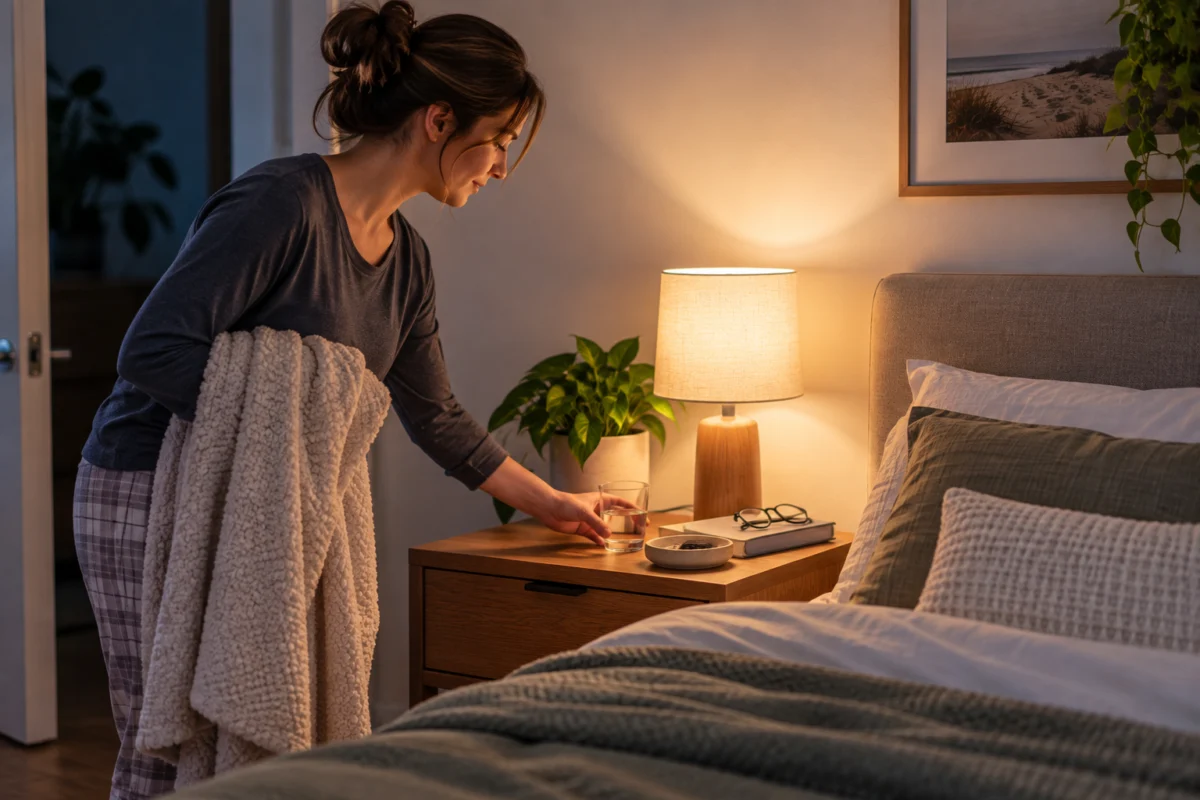
The bedside table is the last small surface your hands negotiate in the dark. A water glass balanced beside receipts, a charging lead lost under a book, or jewellery mixed with used tissues can turn reaching for the lamp into needless fumbling.
A simple bedside reset deals with that particular patch of friction: the few things needed between lights-out and getting up. It is not a bedroom makeover, a drawer-organising session or a reason to start carrying piles around the house late at night. The table only needs to work for tonight and tomorrow morning.
Run the bedside-table checklist
- Remove the clear leftovers. Put rubbish and used tissues in the bin. Take away empty glasses, plates, snack wrappers and anything wet or sticky. These items take up space without serving the night ahead.
- Make one set-aside pile. Put receipts, hair ties, unopened post, loose coins, spare cables and other items that belong elsewhere into one small pile. Do not decide their final homes now. If the pile is large, use a tray, a small bag or the corner of a chair rather than spreading it across the bed.
- Keep the overnight essentials. Leave the items you genuinely reach for: perhaps a lamp, glasses, a phone charger, medication kept there as directed, water and the book currently being read. Headphones may earn a place if they are part of how you settle at night.
- Give each remaining item a deliberate spot. Put water away from the lamp and electronics. Leave glasses where they will not be covered by a book. Coil the charging lead once, with the connector visible from the bed. Set the current book flat or upright at one side rather than over the cable.
- Test the surface with one hand. From where you sleep, check that you can find the lamp switch, pick up water and reach the charger without shifting several objects. Stop when those three actions are straightforward and the set-aside pile is off the tabletop.
A reset on a tired Wednesday night
It is 10.40 pm. On the bedside table are a half-full glass from the previous night, two charging leads, a paperback, lip balm, earrings, a pharmacy receipt and a mug that came upstairs after tea. The phone battery is low, and the useful charger has slipped behind the lamp.
First, take the mug and old glass to the kitchen if that is your next stop, or place them by the bedroom door for the morning. Bin the receipt, put the earrings and lip balm into a small dish, and place the unused charging lead in the set-aside pile. Bring the working lead forward, place the phone beside it, move the book to the far side and refill one water bottle. The bedside table still has a lamp, book, phone, water and glasses. That is enough to switch off the light without wondering where anything went.
Why this small surface has an outsized effect
Bedside clutter is awkward because it gathers from several parts of the day at once. Things are brought upstairs in pockets, carried in with a cup, removed before bed or left behind after reading. By the end of the evening, the table can become a holding area for objects with entirely different destinations. The problem is not simply how much is there. It is that every item competes for the same limited landing space.
Removing finished items first is useful because there is little judgement involved. A used tissue, empty wrapper or yesterday’s glass has a clear next move. That quickly reveals the items that actually need a decision, without requiring you to sort every small possession while tired.
Keeping a set-aside pile also prevents a common detour. A receipt might prompt thoughts about a return, earrings may need their usual storage place, and a spare cable may belong to a device in another room. Those can all be sensible jobs in daylight. They are separate from making the bedside usable. Grouping them contains the loose ends without pretending they have been resolved.
The final arrangement is about reach and risk rather than appearance. Water needs a stable spot because it is easy to knock over when half awake. A visible charger avoids searching near the floor. Glasses are easier to protect when they are not buried under reading material. Even a table that is slightly dusty or has an untidy drawer beneath it can still do these jobs well.
This is also why the checklist ends with a one-hand test. Looking at a tidy surface can be satisfying, but the real question is whether the lamp, water and phone are usable from bed. If they are, the bedside reset has done its job. Dusting, rearranging furniture, buying organisers and sorting the drawer belong to another occasion.
Bedside reset questions
What should stay on a bedside table?
Keep what supports your usual night and morning: a lamp, water, glasses, a current book, a reachable charger and medication only where it has been advised to be kept. The exact mix can differ from one household to another.
Where should I put items that do not belong there?
Make one contained set-aside pile, preferably away from the table and out of the walking path. Return it properly the next day, rather than opening drawers or starting a broader tidy just before sleep.
What if my bedside table has no drawer?
A shallow dish, coaster or small tray can hold small items such as glasses, a watch or lip balm. It gives them a defined place without adding much to the surface.
Leave one clear landing place beside the bed
Finish with a stable drink, an accessible light, the charger you use and only the objects that help with sleep or the first minutes of the day. Once your hand can reach what it needs without moving clutter, leave the bedside table alone and turn in.