
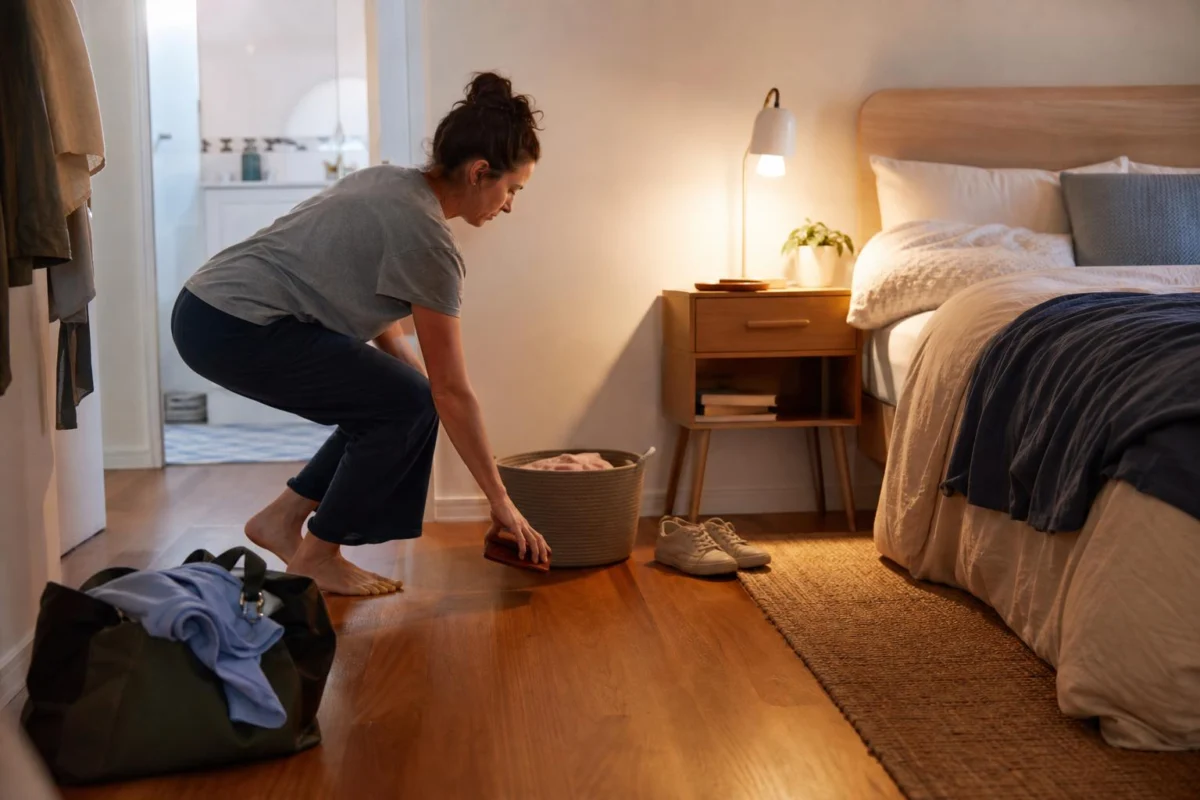
At 10 pm, the decision is rarely whether the house needs attention. It is whether to carry the glass from the sofa, put tomorrow’s keys somewhere sensible and go to bed, or start on the saucepan, the washing and the unopened mail as well. Those extra jobs can turn a short final lap through the house into another hour awake.
This five-minute evening reset is for leaving a workable route between where you are and where you sleep, while setting up one thing that makes tomorrow’s exit less scattered. The saucepan may remain at the sink. The mail can stay in its pile. Tonight’s job is to put the loose ends of the evening in places that will not trip, delay or distract you in the morning.
Five minutes from sofa to bedside
- Minute one: collect what has been used up. Take cups, glasses, snack packets and dinner plates from the lounge or dining table to the kitchen. Put rubbish in the bin. Load dishes only if the dishwasher is ready; otherwise leave them together at the sink rather than washing a whole batch.
- Minute two: clear the night route. Look at the walk from the living area to the bathroom and bedroom. Move shoes against a wall, lift a tote from the floor and shift charging cords out of doorways. In low light, a clear passage matters more than a neat-looking room.
- Minute three: contain today’s clothes. Put socks, shirts and exercise gear in the hamper if they need washing. Hang a jumper or jeans that can be worn again on a hook or hanger. Remove clothing from the bed and the chair you will want tomorrow.
- Minute four: assemble one leaving item. Put keys with your bag, slide a work pass into the bag pocket, or place a library book beside the front door. Select the item most likely to cause a morning search. Do not start reviewing your calendar or packing for every possible contingency.
- Minute five: set the bedside area. Put your phone on charge, fill or place your water glass, return glasses or a book to the bedside table, and remove anything that is sitting on the bed. Then switch off the lights you have finished using.
A late Tuesday night, minute by minute
You have finished dinner on the sofa and realise your train leaves earlier than usual tomorrow. At 10:18 pm, carry the bowl, spoon and water glass to the kitchen. At 10:19, move your runners from the hallway and put your handbag on the console rather than in the middle of the floor.
At 10:20, put the shirt you wore into the laundry hamper and hang your cardigan. At 10:21, add your office pass and headphones to the handbag, then place it beside the door. Use the final minute to plug in your phone and clear a paperback and yesterday’s mug from the bed. The frypan remains on the stove, and the stack of mail remains on the table. Neither affects getting into bed or catching the train.
Why this short sequence holds together
Bedtime clutter is often made of objects with different futures. A plate needs to reach the kitchen. A shoe needs to stop blocking the hall. A work pass needs to travel with you in the morning. A book needs to be near the bed, or elsewhere entirely. Giving each of these a direct destination reduces the number of small decisions waiting at either end of the night.
The order follows your actual movement through the home. It starts where the evening has spread out, follows the route you are about to walk, and ends at the bedside. That means you are not circling back to tidy rooms you have already left. It also keeps the task close to sleep rather than drifting into organisation, cleaning or planning.
Some jobs have a hidden second stage. Folding clean washing leads to drawers. Opening a parcel can lead to a return label. Reading mail may uncover a bill or an appointment. A proper kitchen clean may involve wiping benches, emptying the dishwasher and dealing with food containers. They are reasonable jobs, but they ask for more attention than this reset is designed to use.
The morning item is deliberately limited to one. A bag with keys and a pass, shoes by the door, or a filled bottle in the fridge can remove a familiar point of friction without asking you to prepare an entire day before sleep.
Questions for the last five minutes of the day
What if the kitchen is genuinely messy?
Move food and used dishes to the kitchen, deal with anything likely to smell or become difficult overnight, then leave the deeper clean. The reset is still successful if the lounge, path and bed are usable.
Should I lay out tomorrow’s clothes?
Only if you already know what you are wearing. If the weather, plans or laundry situation need thought, put away today’s clothes and leave that choice for a more alert time.
What if I only manage two minutes?
Take drinkware and dishes to the kitchen, clear the floor near the bed, and put keys with the bag. Those three moves address the most immediate overnight and early-morning annoyances.
Leave the house in night mode
Stop once the route to bed is open, today’s loose items are contained, and one thing for tomorrow is waiting where it belongs. Turn out the light with the remaining housework still visible if necessary. It can be dealt with later; the evening reset has done its particular job.