
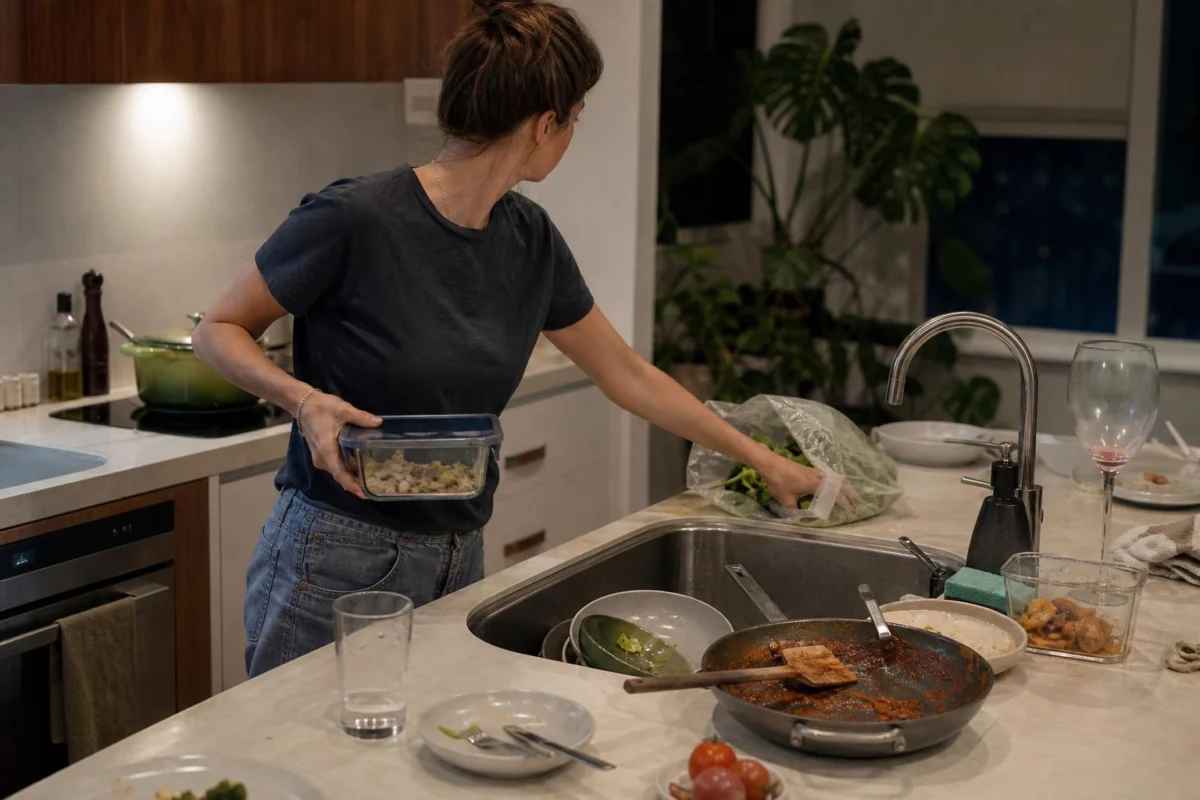
The frypan with sauce on it is often where kitchen closing stalls. It asks a question that feels larger than it is: scrub it now, soak it, or face it tomorrow? While that question sits at the sink, the salad bag stays open, glasses remain around the room and the bench keeps its dinner-time clutter.
A ten-minute kitchen closing routine starts by giving the obvious objects an overnight destination. Leftovers go cold, scraps leave the sink, dishes are loaded, washed, stacked or soaking, and the first patch needed in the morning is uncovered. This is a close of dinner service, not a full clean of the room.
Give each dinner object somewhere to be overnight
- Put away food before touching the washing-up. Pack leftovers you intend to eat, refrigerate opened ingredients and discard food that is finished. Close the bread bag, return the milk and move any fruit or vegetables that have been left on the bench. This prevents food from being caught among plates and pans while you decide what to wash.
- Clear scraps and packaging from the sink area. Scrape bowls and plates into the bin or compost. Throw out tea bags, foil, empty packets and bottle tops. Take cutlery out of the sink if it has disappeared beneath other things. The sink is easier to read once it contains dishes rather than dinner remnants.
- Assign the dishes one of four places. Put dishwasher-safe items into the dishwasher if there is room. Hand-wash the few items that are fast or required for breakfast. Make one stable stack for dishes that will wait, and fill a stubborn saucepan, roasting dish or frypan with warm water and detergent to soak. Avoid scattering unfinished washing-up across the bench, table and draining board.
- Find tomorrow’s first working patch. Look at the place likely to be used first: beside the kettle, in front of the toaster, or near the lunchbox drawer. Remove plates, boards, opened food and crumbs from that small area. Wipe it where there is an actual spill or residue; there is no need to polish every bench.
- Set out one item for the morning that is genuinely useful. Fill the kettle, place a clean mug by the coffee, refill a drink bottle, or put a lunch container where it will be seen. Base this on the next morning’s plans. An early school run and a quiet work-from-home morning need different preparation.
- Check the kitchen’s operating points and leave. Look at the cooktop, oven controls and tap. Put the dishcloth somewhere it can dry rather than leaving it bunched in the sink. If the bin is full or smells unpleasant, take it out; otherwise leave it alone. Shut cupboards that were opened for dinner and switch off the light.
Map a late pasta dinner without washing everything
It is 8.35 pm on a Wednesday. Four pasta bowls are on the table, a colander is in the sink and tomato sauce has dried around the edge of the frypan. There is half a bag of spinach beside the chopping board, two school drink bottles by the kettle and a clean dishwasher that has not been emptied.
First, the remaining pasta goes into a container and the spinach returns to the fridge. The bowls are scraped, then the loose rubbish goes into the bin. Rather than unload every clean item from the dishwasher, remove enough plates, glasses and cutlery to make a row available. Load the bowls and cutlery, hand-wash the colander, and cover the frypan in warm soapy water.
The work area beside the kettle is cleared of the chopping board and sauce-splashed spoon, then wiped. Fill the drink bottles and refrigerate them. Check the cooktop is off and hang the cloth over the tap. Ten minutes later the frypan is still soaking and some clean dishwasher items remain inside, but the next person can make breakfast without shifting through pasta dishes.
Why an object map beats a general kitchen tidy
After a meal, several kinds of work arrive in the same small space. Perishable food has a time-sensitive destination. Rubbish needs removal from the washing-up area. Dishes need a known holding place. Tomorrow’s tea, coffee, toast or lunches need a clear surface. A broad instruction to clean the kitchen puts all of these on one undifferentiated list, including large jobs such as baked-on pans and full dishwashers.
Mapping objects by destination reduces the number of decisions that repeat themselves. The half-used ingredient is either refrigerated or discarded. A bowl is in the dishwasher, on the rack or in a single waiting stack. A frypan is washed or soaking. None of those positions claims that the kitchen is immaculate; they simply stop the same item demanding attention from several places at once.
The order also reflects what changes overnight. Food left out can become unusable, while a plate that has been scraped and grouped can wait. Sauce may be annoying on a bench, but a narrow wiped section beside the kettle is more valuable than moving every appliance and clearing every paper. Restoring that first-use patch means morning tasks have somewhere to happen without reopening the whole dinner mess.
Limiting preparation to one real morning item prevents the routine from sliding into elaborate planning. Filling a kettle suits a household that starts with tea. A drink bottle and lunch container suit an early departure. If breakfast will be away from home, the useful preparation may be no more than leaving the sink contained and the bench available.
Some jobs deserve their own occasion: cleaning the oven, sorting plastic containers, checking fridge dates, reorganising the pantry or mopping a floor that is not freshly spilled on. They involve supplies, sorting or extra decisions. Leaving them outside this routine keeps the ten minutes directed at closing down tonight’s meal.
Handle the kitchen details that interrupt the close
What if the dishwasher is clean but completely full?
Unload only the everyday pieces needed to take tonight’s plates, bowls, glasses and cutlery. Leave rarely used serving ware or awkward containers for another time.
What if there is no dishwasher in the kitchen?
Wash the breakfast essentials and any item that will smell or attract pests, then rinse and stack the remaining dishes together on one side of the sink.
Should a saucepan always be washed before bed?
No. If it is not needed early, warm soapy water is a sensible overnight state for a baked-on pan. Wash it first only when tomorrow’s meal depends on it.
What if the kitchen is shared and someone is still using it?
Close your own dinner objects first: pack your food, remove your scraps, gather your dishes and clear a small area you have used. Leave shared decisions, such as loading a partly full dishwasher, until there is agreement.
End dinner with a known kitchen, not an empty kitchen
The point of this ten-minute routine is to answer the saucepan question and the smaller questions gathered around it. Refrigerate what matters, contain the washing-up, recover the morning’s first bench space and check the kitchen is safely off. Once each dinner object has an overnight place, leave the pan to soak and let the room stay closed until morning.