
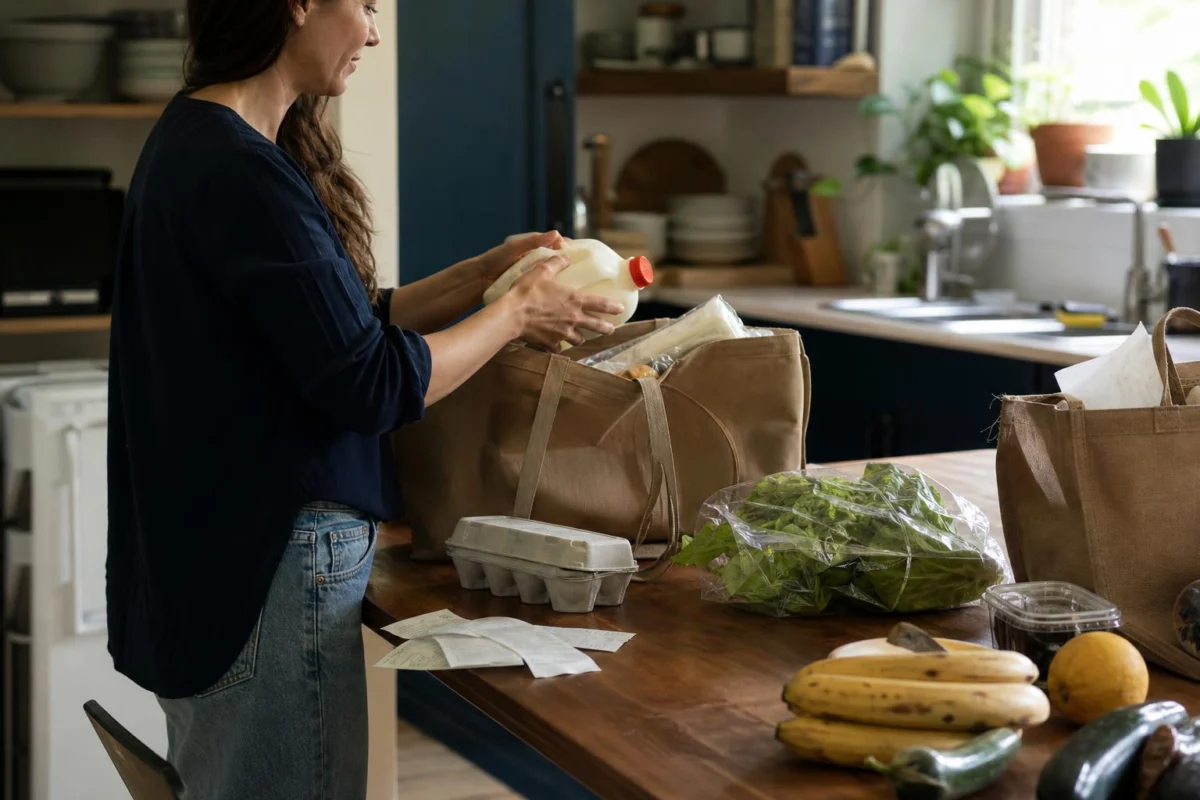
Grocery bags can turn a usable countertop into a narrow strip of cardboard handles, cold cartons, and loose produce. The problem is not that the kitchen suddenly needs organizing. The bags are occupying the surface needed for dinner, coffee, or simply setting something down.
Unpack groceries and clear the countertop by treating each bag as a short map of objects with destinations. Cold food gets protected first, then each remaining object travels to its own cabinet, shelf, drawer, or storage area. The counter is cleared as a result of unloading, rather than becoming a sorting display for the entire haul.
Follow each bag from handle to home
- Make room for one open bag. Move only the object blocking a small unloading patch, such as a dish towel, mail, or a coffee maker accessory. Keep the other grocery bags on the floor, table, or one end of the counter until their turn.
- Pull out frozen and refrigerated items first. Put ice cream, frozen vegetables, milk, meat, yogurt, cheese, and other cold items into the freezer or refrigerator. Broad placement is enough: a crowded fridge shelf can wait for another day.
- Take out one item at a time and name its destination. Cereal goes to its shelf, dish soap to the under-sink cabinet, trash bags to household supplies, and batteries to their designated drawer. Walk the item there instead of creating a category pile beside the bags.
- Keep only imminent meal ingredients together. If dinner is starting soon, place the chicken, pasta, or salad kit near the cutting board. Everything else, including shelf-stable food, goes away.
- Empty the bag completely. Check its bottom and folded corners for a receipt, coupon, produce sticker, or small item. Return reusable bags to the spot where you collect them for shopping; recycle, reuse, or discard other bags according to your usual setup.
- Look at the exposed counter. Put away the last item from the trip. Stop once the surface holds only something deliberately left for the next kitchen task.
A grocery run just before pasta night
At 6:10 p.m., Jordan arrives with two reusable bags, a paper bag holding a loaf of bread, and a twelve-pack of sparkling water. The counter has a fruit bowl, a toaster, and yesterday’s unopened mail, leaving little preparation space.
Jordan slides the mail to the table and opens one reusable bag beside the sink. Frozen spinach and ice cream go into the freezer. Ground turkey, ricotta, and a bag of salad go into the refrigerator, except for the turkey and salad, which are needed for dinner and stay together on a plate near the stove.
From the same bag, a jar of pasta sauce goes to the pantry, toilet paper to the hall closet, and dishwasher tablets under the sink. The second bag contains cereal, canned tomatoes, coffee, and apples. Each goes directly to its usual place. The sparkling water goes on the pantry floor, where full packs normally fit, rather than on top of a cabinet.
Jordan finds the receipt tucked into the paper bag, places it with purchase records, and puts the bread on the counter only because it will be served with dinner. Both reusable bags go on their hook by the door. The counter now has the cutting board, turkey, salad, bread, and saucepan: a dinner setup, not a grocery landing zone.
Why a bag-by-bag route clears the surface
A grocery haul creates friction because it combines several kinds of decisions at once. Some items need cold storage. Some belong in distant parts of the home. Some are useful tonight. A few, such as a pharmacy item or seasonal product, may not have a familiar kitchen home at all. Lining everything up on the counter delays every one of those decisions and uses the very surface you are trying to recover.
Working through one bag makes the next object visible without asking you to compare every item in the haul. It also prevents a common detour: arranging pantry food into perfect groups while frozen food sits out or dinner waits. The destination can be ordinary and slightly imperfect. A box of crackers can go behind another box; coffee can sit with the other coffee. What matters here is that the object has left the counter.
Cold food first is a practical priority, while destination-by-destination unloading limits repeated handling. An item that is set down in a “pantry” cluster, then carried to a cabinet later, has added another step and has continued to occupy space. Sending it directly home reduces the number of loose objects in view.
The final bag check matters for a different reason. Receipts, coupons, produce bands, and one rolling can often become the small leftovers that make a cleared counter feel unfinished. Removing them at the source keeps the grocery trip contained. If an unusual item truly lacks a home, place it in one defined holding spot after the bags are gone, rather than letting it represent the whole haul.
Questions that come up at the grocery bags
What if the refrigerator is too full for new groceries?
Make only the space needed to store the cold items safely. Shift a takeout container, combine two nearly empty shelves of leftovers, or move a jar aside, then return to unpacking rather than cleaning the refrigerator.
Should produce be washed before I put it away?
Wash produce during unpacking only when that is already a dependable household routine and the cold items are stored. Otherwise, put produce in its normal refrigerator drawer or bowl and wash it when preparing food.
Where should I put an item that does not fit anywhere?
Finish the bag first, then put that item in one intentional temporary location, such as a backstock shelf or small basket. A single contained exception is easier to address than an object left in the middle of the countertop.
Can dinner ingredients stay out after I unpack them?
Yes, if you are about to prepare that meal and the ingredients are suitable to remain out briefly. Keep the group limited to what the recipe uses, and refrigerate any perishables not needed immediately.
Leave the counter ready for what the groceries support
The grocery trip is finished when every bag is empty, cold food is stored, and the countertop is no longer holding decisions about where things belong. Leave out only the ingredients for the meal you are actually making, or return the surface to open space for its next use.