
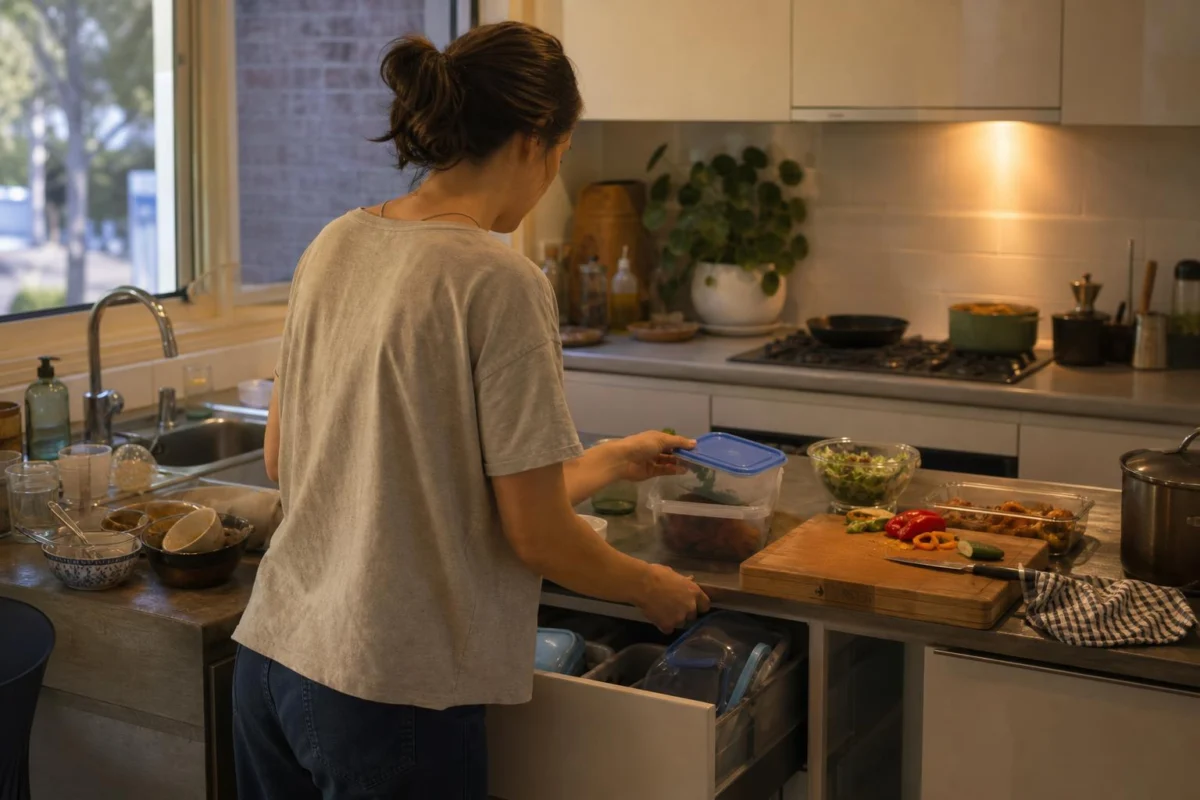
Five minutes in the kitchen can disappear quickly if you begin with the thing that looks worst: the greasy pan, the heap of papers, or crumbs under the toaster. The decision to make here is narrower. What has to work for the next cup of tea, packed lunch or dinner?
For this kitchen reset, the answer is usually cold food put away, a sink that can take water, and one clear place to prepare something. A full dishwasher, unopened post and an oven that needs cleaning may still be there at the end. They are exceptions to this particular job, not signs that it has failed.
Apply the kitchen-use rules in order
- Return food before anything else. Put refrigerated groceries, leftovers, milk, cheese and butter away. Move bread, fruit or pantry items only if they are occupying the area you need. Food is the first rule because it is time-sensitive and otherwise remains in the way while you decide what to do next.
- Remove clear rubbish. Put vegetable peelings, tea bags, empty wrappers, takeaway containers and used paper towel into rubbish or recycling. If the bin is full but still usable, leave taking it out for later. Take it out only when it prevents disposal now.
- Make room for running water. Scrape plates and put dishes in the dishwasher if there is space. If there is not, group them neatly at one side of the sink or draining board. Fill a stuck-on saucepan with water to soak rather than beginning a scrub.
- Claim one food-prep patch. Pick the section beside the stove, kettle or toaster that suits what comes next. Put away kitchen tools that belong elsewhere and shift non-kitchen items into one contained pile away from that patch.
- Clean only the working area. Wipe crumbs, drips and sticky marks from the patch and the sink edge. Stop before moving appliances, sorting drawers or wiping every length of bench.
Making space before pasta on a weeknight
At 6.10 pm, you have brought home a bag containing mince, spinach, yoghurt and pasta sauce. The sink holds a cereal bowl, frying pan and drink bottle. Beside the stove sit a lunchbox, a banana skin, a cutting board covered in crumbs and two school notices. You are avoiding starting because there is nowhere to chop an onion or fill a saucepan.
Put the mince, spinach, yoghurt and sauce away first. Bin the banana skin and place both notices together at the end of the dining table without reading them. The bowl and bottle can go into the dishwasher; the frying pan gets hot water and detergent to soak. Move the lunchbox beside the grouped dishes, put the cutting board in the sink, then wipe the space beside the stove. The dishwasher might still be full and the notices unanswered, but the saucepan can now be filled and dinner can begin.
Why function comes before visual neatness
A kitchen has a fairly predictable sequence of use. Food needs cold storage. Rubbish needs somewhere to go. Dishes need to be contained enough that the tap and drain are accessible. Preparing food needs a clean, flat surface. Following that sequence removes the obstacles that interrupt the next kitchen task.
Starting with whatever catches your eye often creates extra decisions. An envelope on the bench invites you to read it. A crowded dishwasher suggests unloading every clean item. A pan may seem to demand washing immediately. Each may be worthwhile, but none necessarily restores the place where you need to make toast, rinse lettuce or set down a mug.
The rules also make exceptions easier to recognise. Deal with a spill that could spread, broken glass, spoiled food or anything attracting pests before continuing. Those are safety and hygiene matters. In contrast, matching plastic-container lids, arranging the spice drawer, descaling the kettle and cleaning the microwave can wait because they do not usually block the sink or a preparation patch today.
Containing out-of-place household items rather than carrying them through the house keeps this short pass in the kitchen. A library book, charging cable or school notice can sit together nearby for later attention. The aim is not an empty room; it is a kitchen that can support its next ordinary use without a preliminary shuffle.
Kitchen reset decisions that are easy to overthink
What if every bench surface is covered?
Clear the area closest to the task you are about to do, usually beside the stove, kettle or toaster. Put unrelated items together elsewhere rather than finding a permanent home for each one.
Should I unload the dishwasher first?
Unload it if you can do so quickly and it directly gives dirty dishes a place to go. Otherwise, stack dishes together while preserving access to the tap and drain.
What counts as an exception that cannot wait?
Address broken glass, leaking food, a spill underfoot, spoiled leftovers or anything likely to create a hygiene problem. These need attention before the usual food, rubbish, sink and bench sequence.
Is wiping the whole kitchen part of the five minutes?
No. Wipe the sink edge and the preparation area you reclaimed. Cleaning splashbacks, cupboard fronts and spaces behind appliances belongs to a different, more thorough kitchen task.
Stop once the next kitchen task has a place
Finish when cold food is stored, water can run into the sink, and one wiped patch can hold a kettle, chopping board or dinner ingredients. Leave the soaking pan soaking, the papers together and the deeper cleaning untouched. For five minutes, a usable kitchen is the complete result.