
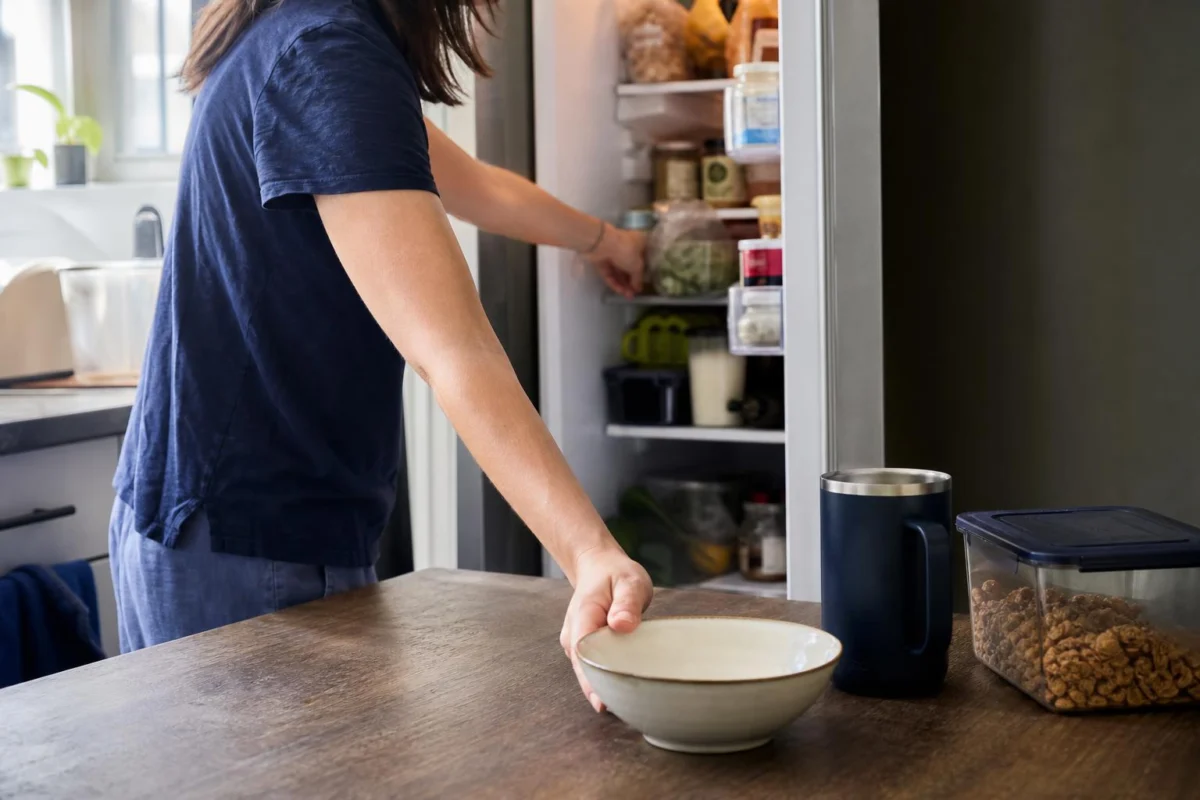
The empty cereal bowl, the buried travel mug, or the yogurt pushed behind leftovers can create more morning friction than breakfast itself. For tomorrow, start with the object you expect to reach for first and see whether putting that one thing in view changes the first ten minutes.
This is a one-night experiment, not a meal-prep project. Pick a breakfast you already have, arrange only the pieces that remove a particular snag, and notice what happens when you enter the kitchen tomorrow. The result may be a bowl on the counter, a banana beside your keys, or simply one yogurt moved to the front of the refrigerator.
Run a one-breakfast test tonight
- Name the likely breakfast. Use tomorrow’s schedule as the guide. Toast and peanut butter may fit an early departure; oatmeal may fit a morning at home; yogurt and fruit may suit a workday with little spare time.
- Find the object that usually holds it up. It might be a clean spoon, the coffee mug, the granola bag, a portable container, or the fruit that gets forgotten in a crowded drawer.
- Put that object at its point of use. Set a bowl and spoon near the cereal, place a mug beside the coffee maker, or put the lunch-sized container by the refrigerator handle if breakfast will leave the house with you.
- Make refrigerated food easy to identify. Keep yogurt, milk, cut fruit, cooked food, and other perishable items refrigerated overnight. Move the item for breakfast to a visible spot on a shelf rather than leaving it on the counter.
- Do one preparation step only if it removes tomorrow’s obstacle. You might wash berries, portion oats, or fill the coffee maker with water. Skip extra chopping, decanting, and dish-making that will not affect the morning.
- Leave the kitchen usable and stop. The test is complete once breakfast has an obvious first move. Put away packages that would clutter the counter and let the rest wait.
Example: the travel mug is the missing piece
At 8:45 p.m., Dana checks tomorrow’s calendar and sees an 8:00 a.m. dentist appointment across town. She plans to eat a banana with peanut butter and take coffee in the car. The food is easy enough, but on rushed mornings she opens three cabinets looking for the travel mug, then leaves without coffee.
Tonight, she washes the mug already sitting by the sink and places it beside the coffee maker. She puts the peanut butter on a small tray with a knife and moves one banana from the fruit bowl to the tray. She fills the coffee maker’s reservoir. Nothing perishable is left out, and no breakfast is assembled in advance.
In the morning, the mug is the first thing she sees. That visual cue leads straight to coffee, banana, and peanut butter. The experiment worked because it addressed her actual delay: locating the mug, not deciding how to cook a more elaborate breakfast.
Why one visible object can change breakfast
Morning breakfast trouble is often a chain of minor interruptions. You open a cabinet and find it full. You remember the fruit only after pouring cereal. You see several options and begin comparing them while standing hungry at the countertop. None of these is a major problem, but together they can make skipping breakfast or grabbing random snacks feel like the fastest route.
A single object placed where it will be used gives the chain a starting point. A spoon beside oats suggests the bowl. A mug by the machine suggests filling it. A container by the refrigerator signals that today’s breakfast is for the commute. It is a physical prompt tied to a real action, rather than a broad evening intention to be more organized.
The small scale also lets you learn what is worth doing. If setting out the bowl made breakfast smoother, repeat that part on mornings with a similar schedule. If the bowl stayed untouched because you wanted toast instead, the lesson is useful too: the planned food did not match the morning. Next time, set out the toaster-friendly items or do less beforehand.
Keeping refrigerated ingredients in the refrigerator matters for both food handling and simplicity. Their job is not to form a display. Their job is to be the next item you see when you open the door for milk, coffee creamer, or another regular breakfast ingredient. A front-of-shelf placement is usually enough.
This approach also avoids turning breakfast into an overnight spread across the kitchen. The counter can still be available for a roommate’s coffee, a child’s school items, or the ordinary morning rush. One object, one food decision, and perhaps one small prep step are plenty to test.
Questions for tomorrow morning’s breakfast test
What if I wake up wanting something different?
Eat something different. The setup is a helpful default, not a commitment. Put away the unused bowl or ingredient afterward and use what you learned when choosing the next evening’s cue.
Should I put all breakfast ingredients on the countertop?
No. Keep the visible setup compact and leave perishable foods refrigerated. One shelf-stable item or piece of tableware is often enough to point you toward the breakfast you selected.
What if I eat breakfast after leaving home?
Set out the item that makes packing possible, such as a reusable container, napkin, or travel mug. Place the food together in the refrigerator so it can be picked up in one pass.
How do I know whether the experiment was useful?
Notice whether you searched less, changed your mind less, or left with the food you intended to have. Keep only the part that made a noticeable difference.
Leave one clear first reach for tomorrow
Before bed, give tomorrow’s breakfast one physical starting point: the mug, bowl, banana, container, or coffee maker part that usually goes missing. Refrigerate what belongs there, keep the counter modest, and let tomorrow morning show whether that single cue earns a repeat.