
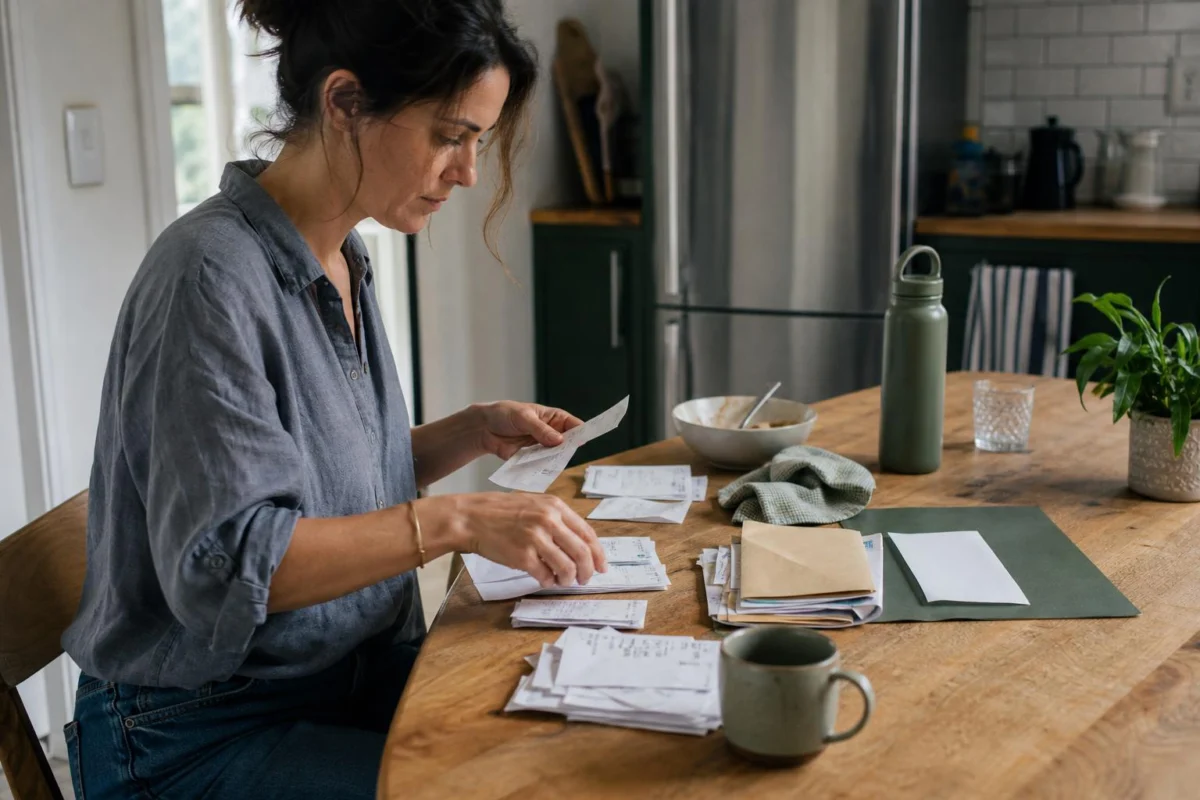
The plate beside your keyboard, the crumpled wrap on the passenger seat or the glass ring on the kitchen table can make lunch feel oddly unfinished. The meal is over, but its containers, crumbs and half-used things are still sitting in the exact place where the afternoon needs to happen.
A Five-Minute Reset After Lunch is a short handover from eating to whatever is next. Its job is to deal with the evidence of this meal: food that needs storing, rubbish that needs leaving the room, and the small patch needed for your next stop or task. It is not an attempt to get the whole house, kitchen or workday under control.
Follow the lunch trail, then stop
- Start where you ate. Look at the table, desk, bench, car seat or lunchroom table. Pick up anything containing food or liquid first: a bowl, takeaway tub, drink bottle, yoghurt pot, coffee cup or half-eaten piece of fruit.
- Decide where the food goes. If you will eat it later and it needs chilling, put it in a container and into the fridge. Put scraps in compost or the bin. Finished packaging can go in rubbish or recycling. A sealed snack for later can return to your bag, drawer or pantry.
- Take dishes only as far as their usual landing place. Carry the plate, cutlery and cup to the sink or dishwasher. Rinse a container if it takes a moment and prevents dried-on food. If washing it properly means shifting a pile of pans or unloading the dishwasher, leave that job for its own time.
- Clear the place you will use next. At a desk, free the area in front of the keyboard and mouse. At the kitchen table, clear one seat and enough table for a notebook or laptop. Before driving, remove the cup, napkins and food bag from the console or footwell. Wipe crumbs, a sauce spot or a wet ring only where it affects that spot.
- Use this decision for every stray item. Is it from lunch? Put it away, throw it out or carry it to dishes. Is it needed in the next hour? Place it where you will use it. Is it neither? Let it remain. Mail, breakfast dishes and a child’s art supplies are not suddenly lunch jobs because you have noticed them.
- Leave one useful afternoon item in view. Fill your water bottle, put your glasses beside the laptop, set the return parcel by the door, or place your keys with your bag. Pick an object that belongs to the immediate next part of the day, rather than opening a list of new tasks.
A kitchen-table lunch before the 2 pm school run
You have eaten toast and tomato beside the family laptop. There is a plate with crumbs, a knife, a tea mug, a tomato packet, your child’s school note and the car keys under a shopping catalogue. Pickup is in half an hour, and you intend to answer one email before leaving.
Put the remaining tomato in the fridge and discard the packet. Carry the plate, knife and mug to the sink without beginning the breakfast washing-up. Wipe the tomato seeds and tea ring from the part of the table where the laptop will sit. The catalogue is not connected to lunch, so leave it. Put the school note and a pen beside the keys, then set the laptop on the cleared section of table.
The table is not fully tidy. It now has a place for the email, and the note and keys are together for the trip out. That is the handover this reset is for.
Why lunch clutter can linger past the meal
Lunch often happens in the middle of something else. You may eat between calls, while children are occupied, after an errand, or at the same desk where work is waiting. Because there is no natural closing activity like packing up after dinner, a cup, container and wrapper can stay put while you try to begin again around them.
Removing food and drink first deals with the items that change over time. Leftovers can spoil, an open drink can spill, and a used container can become less appealing to wash later. It also makes the visible scene simpler quickly. There is a difference between a room that has ordinary household life in it and a workspace still visibly set for a meal.
The decision tree keeps the five minutes from spreading. Lunch items get handled. The one surface or seat needed next gets cleared. Other objects are only moved if they directly prevent the next activity. This matters at home as much as at work: a kitchen bench can contain bills, medications, grocery bags and dishes from several people, none of which need to become part of one person’s post-lunch pause.
Putting out a single relevant item creates a physical cue without requiring a detailed plan. A filled bottle beside the computer, a bag and keys by the door, or a form and pen together can reduce the minor searching that otherwise follows lunch. The afternoon may still be busy; the point is that lunch is no longer occupying its starting space.
Questions that come up after lunch
What if the sink is already full?
Take your lunch dishes to the sink and stop there. Put food away and clear the spot where you ate. A full sink is a separate washing-up task, not a reason to leave a used bowl beside the laptop.
Should I clean the whole kitchen bench?
Only clean the section affected by your meal or needed next. Wipe the crumbs and spill near your lunch plate; leave appliances, shopping and other household clutter unless they are blocking that exact area.
What if I ate at my desk at work?
Remove packaging, cups and food containers before returning to the file or screen. Clear enough room for your hands, notes and keyboard. Shared lunchroom dishes or another person’s mess can stay outside this reset.
Can the five minutes include making another coffee?
It can, if the coffee is the next thing you are genuinely going to use. Clear the lunch items first, then make it. Avoid turning the trip to the kitchen into a broader search through cupboards or a full bench clean.
Leave lunch behind, not scattered around you
Finish when the food is stored or discarded, the dishes have reached the sink or dishwasher, and your next place is free of lunch remains. Sit back at the keyboard, pick up the keys, or use the cleared chair. The rest of the room can wait; this particular meal has been properly put away.