
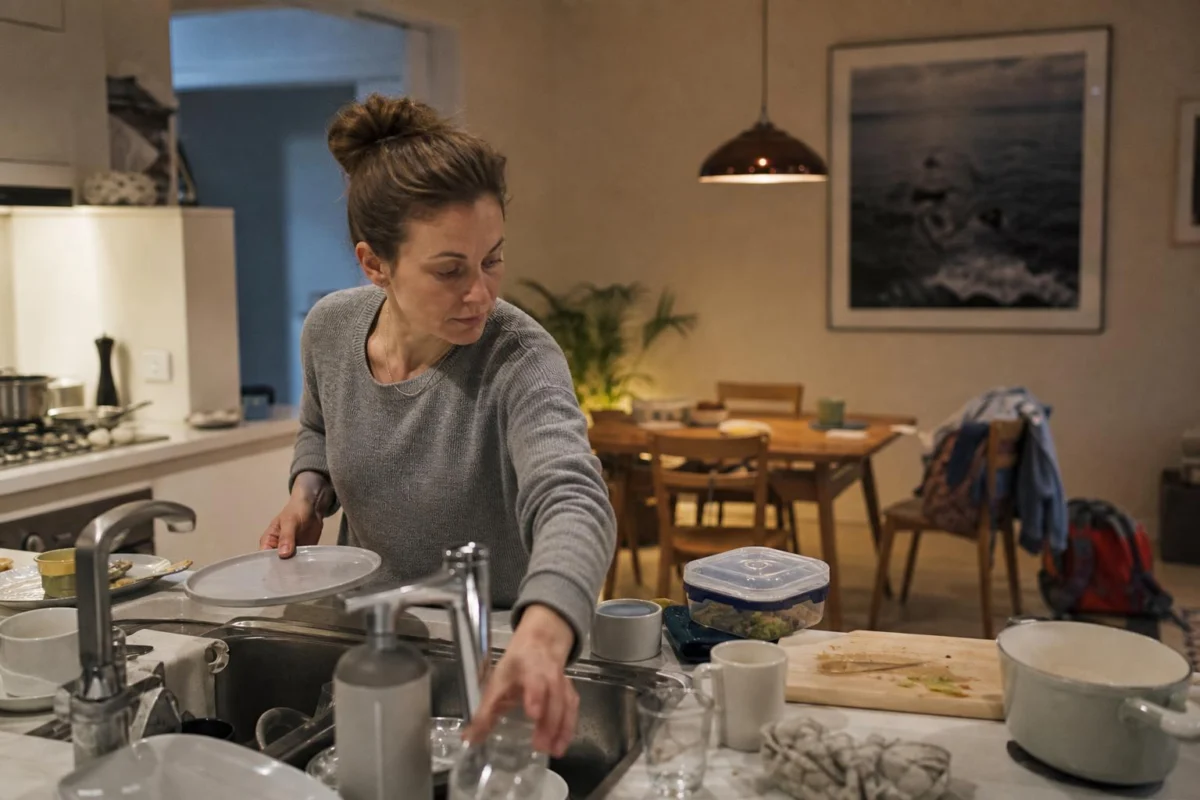
The doorbell is due any minute, and the house is halfway through ordinary life: a school bag on the hall floor, cups beside the sink, clothes over a chair and something waiting on the dining table. The relevant question is not whether the whole place looks finished. It is whether a visitor can arrive, come in and join the occasion without negotiating the household’s in-progress bits.
Use the last five minutes as a guest journey. Start at the front door, follow the route they will take, then look at the place where you will talk, eat, have tea or hand something over. That route changes with the visit. Someone collecting a borrowed drill needs a clear doorstep; neighbours arriving for drinks need seating and somewhere to rest a glass.
Follow the visitor’s likely route
- Ask which kind of arrival this is. If they are collecting or dropping off an item, prepare the entry and the handover spot. If they are coming inside briefly, identify one room or outdoor area. If they are staying for food or drinks, nominate the table, bench or seating area that will carry the visit.
- Clear the line from the door to that place. Pick up anything that could trip, snag or force a sidestep: shoes, a backpack, parcels, pet toys, washing baskets or drying racks. Shift these to one room that guests will not use, rather than starting to sort each item.
- Make space for people and their things. Free the chairs, sofa section or standing space you expect to use. Create one stable landing spot for keys, a handbag, a bottle, takeaway containers or the item your guest has brought. Remove used mugs, rubbish and loose papers from that immediate area.
- Check the bathroom only if guests will be inside. Make sure the toilet, basin and door are easy to reach. Put out toilet paper and a dry hand towel. Move damp laundry, private toiletries and anything fragile from the obvious path; deal with a visible splash if it will bother someone using the basin.
- Set up the purpose of this visit. Put the kettle where it can be reached and locate cups for coffee. For dinner, clear enough table space for plates and serving containers. For a child’s playdate, leave a clear patch of floor and put the dog’s water bowl away from the busiest route.
- Stop at the next sensible moment. Once the door, route, shared area and any needed bathroom work without explanation, answer the door or get yourself ready. The spare room, wardrobe pile and dusty skirting boards are outside this five-minute job.
Deciding what matters before a 6 pm drop-in
Your sister is arriving at 6 pm to pick up a cake tin and stay for a cup of tea. At 5.55, the tin is on the kitchen bench behind unopened mail, the entry has two pairs of runners and a cricket bag, and the lounge has clean washing across one end of the sofa. The dining table is covered with paperwork from an online form.
Because she will come inside and probably sit in the lounge, the decision is not to rescue the dining table. Carry the cake tin to the cleared end of the kitchen bench so it is ready for the handover. Move the runners and cricket bag into a bedroom, then place the washing in one basket beside the bed. Clear the sofa seat closest to the coffee table and move two mugs from the coffee table to the sink.
There is time for one bathroom check: replace the nearly empty toilet roll and hang a dry hand towel. Put the kettle on only if you want tea ready straight away. The mail stays on the bench, and the paperwork stays on the dining table, because neither sits on her route nor interferes with the tea and cake-tin exchange.
Why the route is more useful than a general tidy
Last-minute hosting often feels urgent because your attention lands on every unfinished domestic task at once. The kitchen shows dishes, the bedroom shows clothes, and the table shows papers. Each item may genuinely need attention later, but visitors do not experience the house as one long list of chores. They experience particular spaces in a particular order.
A guest journey gives the decisions a sequence. First comes access: can they open the door, step inside and walk safely? Next comes use: is there a chair, a clear section of bench or a place to put down what they are carrying? Then come the practical extras, such as a bathroom that is straightforward to use or cups for the planned drink. These are visible, limited checks, which is helpful when there is little time left.
The kind of visit also sets the standard. A parcel collection at the front door does not require a living room arranged for company. Friends bringing pizza do not need every cupboard organised, but they will benefit from chairs, a clear eating surface and an unobstructed bathroom. Matching the work to the actual plan keeps you from spending all five minutes on the surface that happens to look most annoying.
Temporary relocation is particularly handy before company arrives. Putting the cricket bag, washing or paperwork in a bedroom is not an attempt to solve storage. It is a way to restore the route and shared space quickly. Keep those things together where possible, so they are easy to deal with after the visit rather than becoming scattered through drawers and cupboards.
This approach also leaves room for your own arrival at the door. You may need to wash your hands, change your shirt, put shoes on before heading to the patio, or simply take the cake out of the oven. A narrow guest-ready check protects that final bit of attention. It avoids turning an expected visitor into a reason to begin a much larger cleaning session.
Questions for the five minutes before company arrives
What should I do if guests are already parking outside?
Clear the entry and the first area they will use, move any obvious trip hazard, and have the relevant item or seating ready. Open the door rather than continuing to clean.
Where can I put clutter in a hurry before visitors arrive?
Put it together in a bedroom, laundry or other unused room, preferably in a basket or on one surface. Avoid hiding loose items in food cupboards, bathroom cabinets or random drawers.
Should I light a candle or use air freshener before guests come in?
Only use scents you already know suit your household and guests. Fresh air, a cleared bin or washing up one strongly scented dish may be more useful than adding fragrance.
What if I do not know whether guests will want to use the bathroom?
For any visit longer than a brief doorstep exchange, a quick bathroom check is worthwhile. Toilet paper, a usable basin and a dry towel cover the main practical needs.
Open the door to the visit you planned
Before guests arrive, prepare their path rather than judging every room. A clear way in, a usable place to gather, the right item or refreshments, and a straightforward bathroom are enough for most visits. Once those points are in place, let the remaining household work remain household work and welcome the people at the door.