
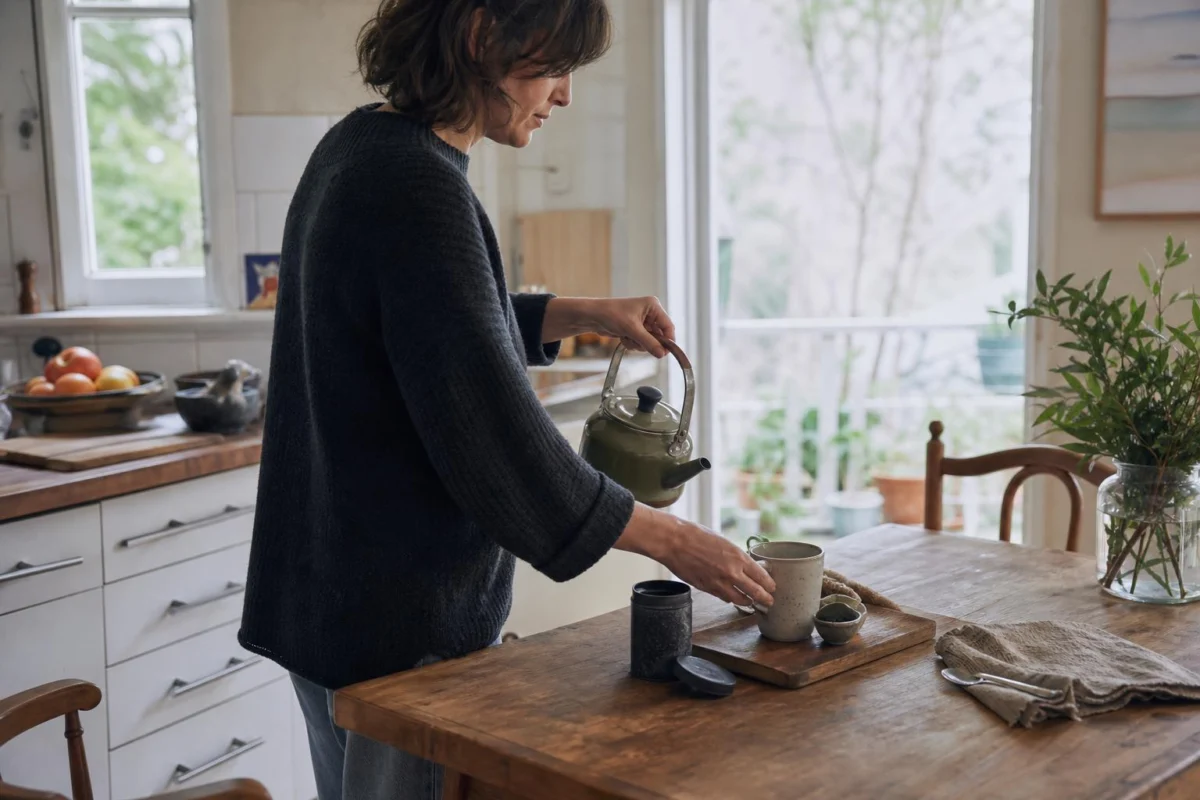
The decision that often gets skipped is not which tea to use. It is whether this cup will be drunk at all, or carried from room to room while you unpack groceries, answer a text and inspect the fridge. By the time the kettle boils, the mug can already have become an accessory to the next job.
For a five-minute tea ritual, decide where you will take the first sips before filling the kettle: the kitchen table, the back step, one chair in the lounge, or a clear end of the bench. That small decision gives the cup somewhere to go besides into the middle of everything else.
This is a modest routine for a regular day, using the tea and mug already in your kitchen. It can sit between arriving home and making dinner, after finishing a piece of desk work, or once the evening dishes are out of the way. The point is not to produce a special atmosphere. It is to make one cup of tea an activity in its own right.
Put one cup ahead of the next job
- Name the moment the tea belongs to. Pick one ordinary handover, such as getting home from work or closing the laptop after a task. A cup attached to a recognisable point in the day is easier to remember than a vague intention to have more breaks.
- Pick the drinking spot first. Put the mug at the table, beside your usual chair, or near the door to the balcony. It need only be a place where you can pause briefly; it does not need to look peaceful or be completely tidy.
- Make the tea as you normally like it. Fill the kettle, add the tea bag or leaves, and use milk, lemon or sugar if that is your usual cup. Avoid turning the ritual into a search for ingredients or a new set of equipment.
- Stay with the direct tea-making jobs while it steeps. Return the tea packet, rinse the spoon, or wipe the splash beside the kettle. Skip jobs that branch outwards, such as opening the mail, emptying the dishwasher or checking what is for dinner.
- Carry the mug to the spot you selected. Leave the phone on the bench for the first part of the drink. Sit or stand there and take a few sips before deciding what happens next.
- End at the cup, not at the kitchen. Put the mug in the dishwasher, rinse it, or leave it with the washing-up. Then return to the activity that was waiting. The tea does not need to lead into a general household catch-up.
The arrival-home version, including the interruption
It is 5.45 pm and you have put your keys, supermarket bag and unopened post on the kitchen bench. Your usual impulse is to look through the post while deciding whether there is enough time to start dinner. Instead, you place a clean blue mug at the end of the table, fill the kettle and choose a black tea bag.
While it steeps, you put the tea box back in the cupboard and move only the bread bag off the chair where you will sit. A notification lights up on your phone beside the keys. It may be tempting to read it, especially while waiting for the tea to cool. Leave it there. Take the mug to the table and have several sips.
Then your child asks where their sports shirt is, or you remember the chicken needs to come out of the fridge. That is the recovery point: answer the question or start dinner. The ritual has not failed because it was interrupted. You had a cup that reached its intended place instead of becoming a lukewarm object beside the chopping board.
Why this works better than drinking tea on the run
Tea already has a useful built-in sequence: fill kettle, wait for water, steep, let the drink cool enough to hold, then drink it. There is no need to add journalling, music, special crockery or a perfectly cleared room. The routine works by keeping that existing sequence from being broken into by unrelated decisions.
The most common mistake is treating the boiling kettle as spare time. A person goes to put away laundry, checks a group chat, starts wiping the bench or opens a cupboard looking for something else. The tea still gets made, but it arrives among several half-started jobs. Selecting a place for the mug beforehand reduces that drift because the next physical move is already obvious.
Another mistake is expecting five uninterrupted minutes. In a busy household, the kettle may boil as someone comes through the door, a delivery arrives, or a work message needs a response. Rather than abandoning the routine, use a smaller version: finish making the drink, take one sip where you are, and come back to it if you can. The ritual is a shape for an ordinary cup, not a test of whether the house stays quiet.
Keeping the final tidy-up limited matters too. Rinsing one mug is connected to the tea. Reorganising the drawer of mismatched teaspoons is a different job with a different amount of attention required. Separating those actions helps the cup remain a brief pause rather than the opening move of a cleaning session.
Decide the mug’s destination before the water is hot, then let the rest of the kitchen remain unfinished for a few minutes.
If you regularly find yourself hunting for a clean mug or the tea you actually drink, change one detail near the kettle. Keep that tea at the front of the cupboard, return a teaspoon after washing up, or clear a mug-sized patch on the bench. The aim is a direct route from cupboard to kettle to drinking spot, using what is already there.
Questions that come up around a tea ritual
What if I prefer coffee or herbal tea?
Use the hot drink you genuinely make. The useful part is the short sequence and the chosen place to drink it, not the variety of tea. Herbal tea, instant coffee or a cup of decaf can all serve the same role.
Does the tea have to be finished within five minutes?
No. Five minutes is a rough container for making it and having the first part without other input. If the drink takes longer to cool, leave it somewhere safe and continue later.
What if someone else wants to talk while I am having tea?
Talk with them if that is what is happening. A shared cup at the table can still mark the change between parts of the day. The routine is not dependent on silence.
What if I forget and drink it while standing at the sink?
Nothing needs fixing. Next time, put the mug at its usual spot before switching on the kettle. That earlier move is the part most likely to change the pattern.
Let the mug arrive somewhere
A five-minute tea ritual can be as plain as a familiar mug, a kettle and a chair cleared of a bread bag. Before the water boils, decide where the tea will be drunk. Make it, carry it there and take a few sips before picking up the post, starting dinner or reopening the laptop. Once the mug is dealt with, the next part of the day can begin.