
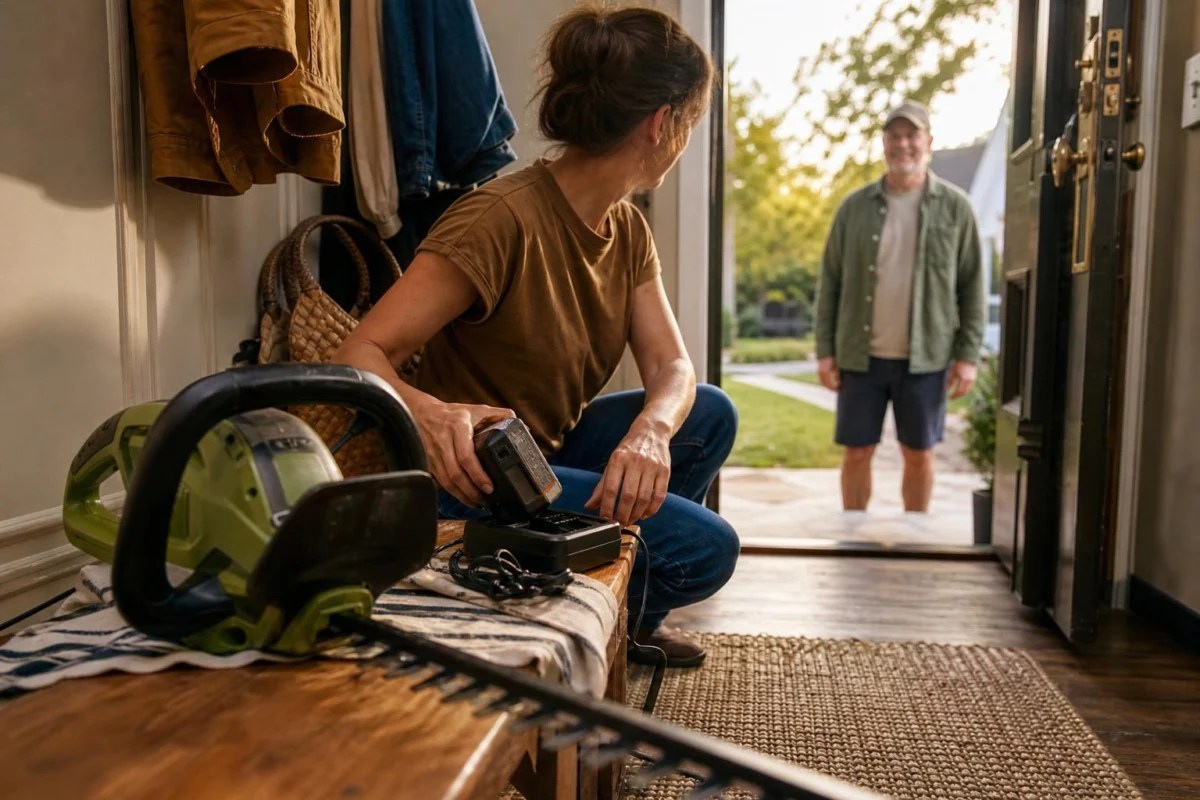
The text says you will see your neighbor this afternoon, and suddenly the borrowed hedge trimmer is no longer an abstract thing to return someday. It needs to be found, checked for its charger, and put where it will actually leave the house with you. That short stretch before a likely handoff is the useful moment to get a borrowed item ready.
Start with what you can see and reach. The item may be under your own kitchen gear, in a closet, or resting in the garage after its last use. Rather than launching a broad cleanout, locate the borrowed thing, bring its pieces together, and give it a temporary home that makes its owner and return plan obvious.
Get one borrowed item ready for its next handoff
- Find the item before making other plans. Look in the place where you last used it or set it down. Check the shelf, trunk, counter, or closet first; do not reorganize the surrounding area while you search.
- Restore its return condition. Wash a serving platter, shake dirt from a borrowed folding chair, wipe sawdust from a drill, or remove your files from a loaned device. If it needs a basic task from you, do that while the return is on your mind.
- Collect the parts that belong with it. Match a casserole dish with its lid, a tool with its battery and charger, or a camera with its memory card, cap, and strap. Use the original case, a zippered bag, or a paper bag for loose pieces when appropriate.
- Add a clear owner label. Put removable painter’s tape or a paper tag on the item or its container. Write both the person’s name and the object: “Maya—green cooler and drain plug” is more useful than “return.”
- Place it in a protected return location. Set it apart from your own belongings: a tote on a closet shelf, one side of a utility-room cabinet, or a marked spot in the garage. Keep fragile, valuable, or electronic items somewhere stable and out of reach of children and pets.
- Stage it by the exit only for a known trip. Once you have a specific coffee date, pickup, errand, or visit, place the item beside the bag, coat, or shoes you will use. Until then, leave it in the return location instead of storing it in the car.
A borrowed cooler becomes ready for Saturday
Friday evening, Jordan gets a message from Maya: they will both be at the park for a Saturday afternoon cookout. Jordan borrowed Maya’s green hard-sided cooler the previous weekend. It is currently in the garage with a damp dish towel inside and the small drain plug sitting on a workbench nearby.
Jordan empties the cooler, dries it, and puts the plug inside a labeled paper bag. The bag goes in the cooler, and a strip of painter’s tape on the handle reads, “Maya—green cooler, plug inside.” Jordan sets it on a clear section of the garage shelf overnight rather than beside the front door, where it could block the walkway.
On Saturday, after loading the picnic bag and folding chairs, Jordan carries the cooler to the car. The label and the plug in the bag answer the only questions that could slow the handoff. At the park, Maya receives a clean, complete cooler without anyone searching through the garage or checking the trunk after the cookout begins.
Why separating it now saves the later search
Borrowed belongings become hard to spot when they are treated like household inventory. A neighbor’s mixing bowl looks at home among your bowls. A friend’s paperback can disappear into a bookcase. A borrowed umbrella may join the ones by the door. After a few days, remembering that an item exists is not the same as remembering where it went.
A label, a dedicated spot, and all the relevant pieces in one place turn a vague memory into visible information. If another person in the household finds the item, they can tell it is not available for everyday use, lending, donation, or trash. You also avoid having to reconstruct which lid, cable, attachment, or accessory belongs to whom.
The return location does not need to be elaborate. Its job is to keep borrowed items separate without putting them in harm’s way. A high closet shelf can suit a book or baking dish. A padded box may suit glassware. A garage wall area can work for a large borrowed ladder if it is dry, stable, and clearly marked. For an instrument or electronics, use the storage conditions the item reasonably requires rather than an entryway pile.
Keeping the item out of the car until the day of a handoff has a practical benefit too. Cars collect groceries, sports gear, bags, and passengers. An item can end up beneath other things, move to a different vehicle, or remain there through several unrelated trips. A shelf or tote at home is easier to check deliberately.
If you do not know when you will see the owner, the same setup still works. Send a brief note that the item is cleaned, complete, and set aside, then ask whether they prefer pickup, a future visit, or mailing. The item can wait safely without blending into your belongings or becoming another task each time you notice it.
Return-ready details that can cause trouble
What if I cannot find an accessory that came with the borrowed item?
Keep the main item labeled and separate while you check the last place you used the accessory. Tell the owner promptly if it remains missing rather than silently returning an incomplete set.
Should I put borrowed items near the front door right away?
Only if the return is tied to an imminent trip and the item will not obstruct the entrance or be damaged there. A protected storage spot is safer while the date remains uncertain.
What if I have borrowed things from several people at once?
Use one return area, but give each person’s belongings a separate bag, box, or shelf section. Label each group clearly so a charger, lid, or attachment does not get mixed into another return.
What should I do with a large item that will not fit on a shelf?
Choose a dry, out-of-the-way garage or closet-floor location and attach a visible owner label. Let housemates know it is borrowed, especially if it could otherwise be used, moved, or discarded.
Let the next sighting be the handoff
Once the borrowed item is clean, complete, labeled, and waiting in its own protected place, stop there. Bring it to the door or car when the visit is real. The point is not to build a household inventory system; it is to make the next chance to return that particular item straightforward.