
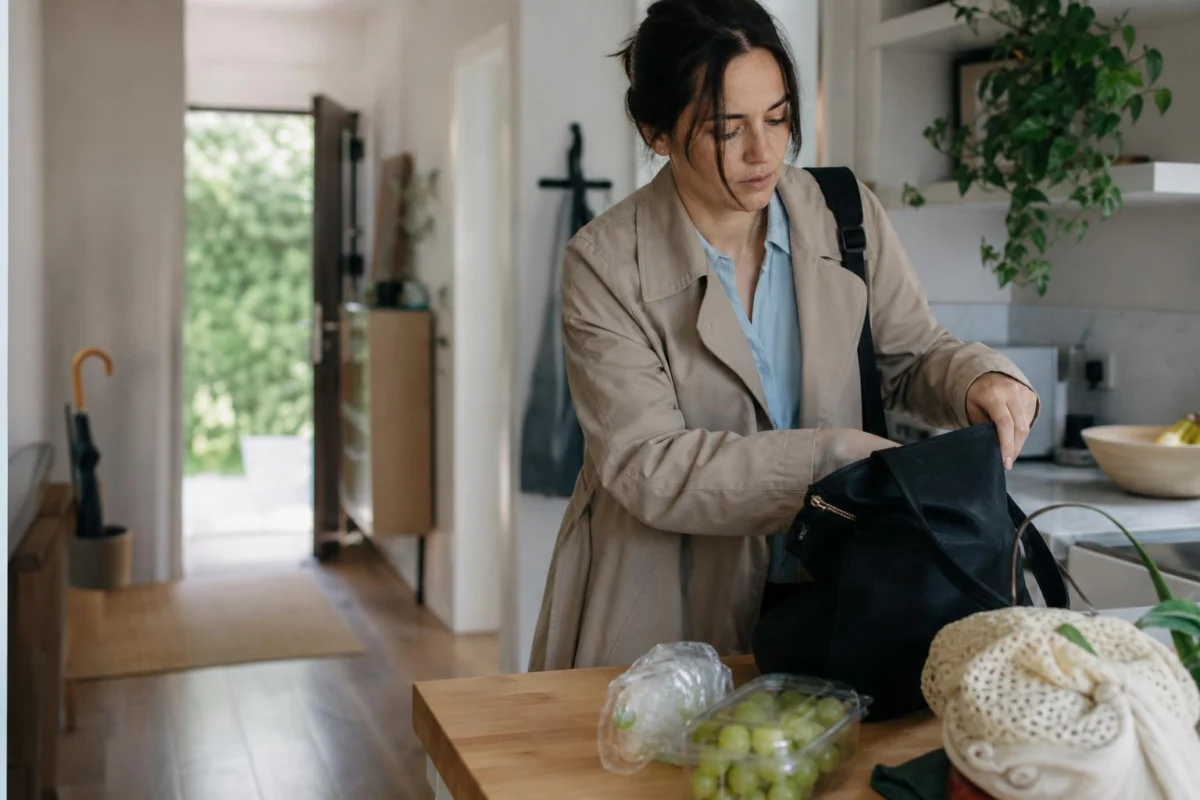
The front door opens, but the train ride is still physically with you. Your shoulder has the mark of a laptop strap, your travel card is somewhere in a pocket, and the damp umbrella is threatening the floorboards. Perhaps the bus was late, someone rang during the drive home, or you spent the last ten minutes of the trip working out dinner, pickup times and tomorrow’s start.
Getting through the door after a busy commute is an awkward in-between moment. You are home, yet your hands are still occupied by the journey. This five-minute reset deals with the loose ends that travel has brought inside: the items that can be lost, spoil, drip, run flat or make the next part of the evening harder to begin.
Five minutes from door to evening
- Minute one: put the departure essentials in one known spot. Place your keys, wallet, travel card, work pass and house fob where they are normally found. Empty only those items from pockets or bag sections. A kitchen bench full of everything from your bag is not the aim.
- Minute two: identify whether this is your last arrival today. Check what is actually next: dinner at home, a school collection, an evening shift, a walk with the dog, or a quiet night in. If another trip is coming soon, keep the main bag packed and check that its necessary contents are still there.
- Minute three: deal with the one item affected by waiting. Open an umbrella over the bath or laundry sink. Put a lunch container in the kitchen. Hang a wet jacket. Plug in the phone if you will rely on it later. Throw out a takeaway cup with dregs in it. Pick the item that will be more annoying by morning.
- Minute four: remove one piece of the commute from your body. Take off work shoes, wash your hands, change damp socks, loosen a tight collar or put on a dry shirt. This is a small practical adjustment, particularly after a packed tram, a hot platform or a wet walk from the station.
- Minute five: set up the immediate next move. Pour a glass of water, take the ingredients for dinner from the fridge, put the basketball bag by the door, or sit down with a snack. Finish by doing the named next thing rather than reopening the bag to sort receipts, cables and old papers.
A delayed train, wet shoes and a 6.30 pickup
At 5.52 pm, Dan arrives after a delayed train and a walk through rain from the station. He has a backpack with his laptop, a paper bag containing a half-eaten sandwich, a dripping umbrella and his child’s swimming towel in the boot of the car. He has to leave again at 6.30 pm for squad training.
First, Dan puts his keys and travel card in the tray by the door. He checks the pickup message and recognises that he is only home briefly, so the laptop backpack stays closed. The sandwich bag goes in the kitchen bin, the umbrella is opened in the shower recess, and his phone goes on charge beside the kettle. He changes from wet leather shoes into runners, drinks a glass of water, then takes the swimming towel from the car. By 5.57 pm, the things with consequences have been handled and he can leave again without hunting for his keys or stepping around a puddle later.
Why the commute needs its own short landing sequence
A busy trip home creates a particular kind of clutter. It is not simply mess. It is a mix of objects from different places, each carrying a small decision: the access card for tomorrow, the food container from lunch, headphones, a raincoat, a low phone battery and whatever you brought home from work or shops. If all of it lands on the nearest surface, those decisions remain visible and unfinished while the evening is trying to start.
Beginning with keys and other access items has a direct benefit. Those are the objects that commonly disappear into coat pockets, a different bag, the sofa or a pile of mail. Giving them their usual place immediately prevents an ordinary morning search. It also frees your hands before you decide what deserves attention next.
The question about another departure is useful because it changes what “putting things away” means. Someone staying home can remove a lunchbox, wet clothes and food from their bag. Someone leaving for netball, a late appointment or a night shift may be better off preserving the packed bag and dealing only with its urgent contents. Fully unpacking in that case can create extra work and increase the chance of leaving without an item needed later.
Travel also leaves physical residue. Feet may be wet, hands may feel grimy after public transport, or you may be thirsty without having noticed it. Addressing one of these conditions makes the move into home life more comfortable in a concrete way. It is not a reward for completing a household routine; it is basic care after being out in traffic, weather or crowds.
Limiting the reset to things affected by overnight waiting keeps it proportionate. A leaking container, damp jacket, food scraps or a flat phone can cause a clear problem. Receipts, old gum packets and tangled chargers are usually less urgent. They can remain in the bag until you have time and interest to deal with them properly. The result is an entry area that functions for this evening and a commute that has stopped spilling into every room.
Notifications are worth handling selectively in this window. If you are expecting a message about a pickup, delivery, shift change or family plan, check for that update. Otherwise, opening every alert can bring work conversations and group-chat noise into the hallway before you have even put down your things. The first useful phone action may simply be charging it.
Common questions after getting home
What if I get home and immediately have to cook or help someone?
Put keys in their place, handle any wet or perishable item, then begin dinner or help. Shoes can stay by the door and the bag can remain closed until the immediate demand has passed.
Should I unpack my work bag every evening?
Only unpack what needs cleaning, drying, charging or refrigeration, plus items you specifically need at home. Keeping ordinary work equipment together can make tomorrow’s departure simpler and reduce scattered belongings.
What if my commute ends in the garage or carport rather than at a front door?
Use the first indoor surface or hook you reliably pass. Bring in keys, phone and any item that cannot stay in the car, then deal with wet gear and food once inside.
Can I sit down before doing these steps?
Yes, especially if you are sore, overheated or depleted. Before sitting, place keys somewhere findable and move anything likely to leak, spoil or drip. The remaining steps can wait until you are steadier.
Leave the platform, traffic or bus outside
A five-minute reset after a busy commute is enough to secure the essentials, prevent the obvious overnight problems and decide whether you are settling in or heading back out. Once your wet gear, food, phone and access items are accounted for, move into dinner, rest or the next trip. The journey has arrived with you; it does not have to occupy the whole evening.