
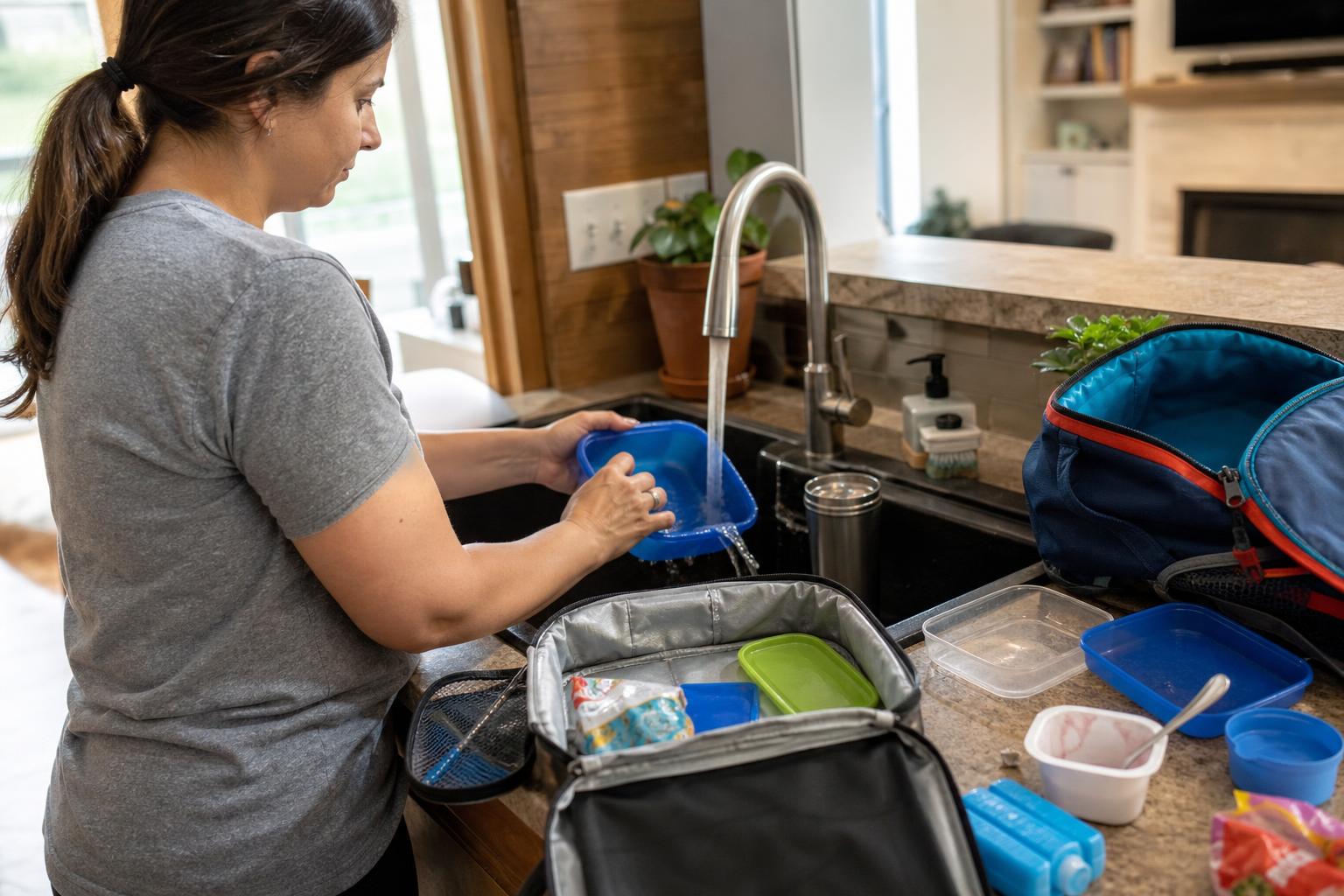
An unzipped lunchbox can hold a surprising amount of the school day: a warm ice pack, a crushed snack wrapper, a sticky yogurt spoon, and a container lid pressed into a side pocket. Left inside the backpack, those items become harder to notice and less pleasant to handle by evening.
That bag is easiest to deal with while it is still near the kitchen and its contents are still together. This five-minute lunchbox reset has one job: empty today’s food gear, sort its small parts, and leave wet items open to dry. It is not the time to plan tomorrow’s lunch.
What should happen to the lunchbox right after school?
- Bring the lunchbox to one kitchen surface. Set it on the countertop, table, or a cleared spot beside the sink. Unzip every compartment before removing anything, including the front pouch where napkins and cutlery can hide.
- Take out food and ice packs first. Put trash in the trash, deal with any food you are intentionally keeping, and move the ice pack out of the insulated bag. Check underneath containers for a banana peel, loose crackers, or a forgotten cheese stick.
- Lay out every part in view. Put each container beside its lid. Set bottle caps, silicone seals, divider trays, reusable utensils, and snack pouches in the same small area. This is the moment to spot a missing piece without emptying the whole backpack again later.
- Wash or stage the used gear. Rinse and wash items as their care instructions allow, or load dishwasher-safe pieces if there is space. If the sink is busy, place the empty pieces together beside it rather than returning them to the lunchbox.
- Check the bag itself. Brush out crumbs over the trash. If there is a spill, wipe the lining with a damp cloth and follow the bag’s care label for further cleaning. Leave the lunchbox unzipped so its interior can air out.
- Put the empty backpack back where it belongs. Return the backpack to its hook, cubby, or other arrival spot. Leave containers and lids apart until dry; the reset ends there.
What does this look like on a regular Wednesday?
At 3:35 p.m., Maya drops her navy backpack by the kitchen island. Her lunchbox has a cold pack, an empty water bottle, a bento-style container with two strawberry tops in one compartment, and a loose purple lid from a yogurt tube. A paper napkin is stuck in the lunchbox mesh pocket.
The lunchbox goes onto the countertop before Maya starts a snack. The strawberry tops and napkin go in the trash, and the cold pack is set on a clean section of counter. The purple lid is placed beside the matching container. The bottle, container, lid, and removable divider are washed and spread in the dish rack. A few crumbs are shaken from the bag, which stays open on the counter. The backpack goes back to its hook empty.
No one has to decide whether Friday needs a special lunch, replace a nearly empty snack box, or start dinner dishes. Today’s lunch items are simply no longer sealed inside an insulated bag.
Why deal with the lunchbox before the backpack disappears?
A lunchbox is a contained problem at first and a scattered one later. Right after school, the bottle is usually still in the bag, the matching lid is likely nearby, and the reusable fork has not slipped under a reading folder or onto a bedroom floor. Opening the lunchbox at the kitchen surface keeps the search limited to one bag and one small patch of counter.
Food residue also changes the task. A backpack can be set down and forgotten because it looks closed and finished, while its lunch compartment contains moisture, crumbs, and leftovers. Removing those things early keeps the bag from carrying the smell and mess into the evening. It also gives an ice pack a chance to thaw somewhere visible instead of remaining cold and damp in the bottom of the bag.
The small pieces deserve attention because lunch gear tends to work only as a set. A container base without its lid cannot hold tomorrow’s grapes. A water bottle without its cap is not ready to fill. A separated gasket may be easy to overlook in a dish rack. Lining up components before washing makes the missing part obvious while the most likely location, the lunchbox, is still open.
Drying matters for the bag as well as the dishes. Closing a damp container, cap, or insulated bag traps moisture where it is difficult to see. Leaving washed parts separate and the lunchbox unzipped provides a clear visual state: these are clean but drying, and this bag is empty. That is more useful than putting everything away quickly while it is still wet.
Keeping the scope narrow also helps on crowded afternoons. Homework papers, snack requests, sports gear, and dinner may all arrive at the same time. This reset does not solve those demands. It handles the objects that touched lunch and returns the backpack to its usual place. For a broader kitchen cleanup later, see resetting your kitchen in five minutes.
Children can take part in ways that fit their age and household rules. One child may carry the lunchbox to the counter and match lids; another may empty wrappers and put a bottle in the sink. An adult may need to handle food safety decisions or washing. The useful arrangement is the one that gets the lunchbox opened on the afternoon it comes home.
Questions that come up at the lunchbox counter
What if the lunchbox comes home much later in the afternoon?
Open it as soon as you find it, even if washing must wait. Remove food, trash, and the ice pack, then keep all washable parts together near the sink.
What if there is no room in the dishwasher?
Rinse food residue if possible and group the container, lid, and any removable pieces in one visible washing area. Do not reassemble them inside the lunchbox.
Should clean containers go back into the lunchbox immediately?
Wait until the containers, lids, and lunchbox lining are dry. Putting damp pieces back inside can leave moisture trapped in the insulated compartment overnight.
What if a lid or bottle cap is missing?
Check the open lunchbox pockets and the backpack’s main compartment once. Then place the unmatched item in a known spot rather than conducting a house-wide search.
For more school-day routines with a limited scope, explore five-minute resets for parents.
Close the school-day lunch loop here
Stop after the food is out, the lunchbox is empty, and each container part is washing or drying in plain sight. Tomorrow’s sandwich, snack choices, and packing decisions belong to another moment. Today’s result is an aired-out lunchbox and an empty backpack that will not deliver yesterday’s lunch at bedtime.