
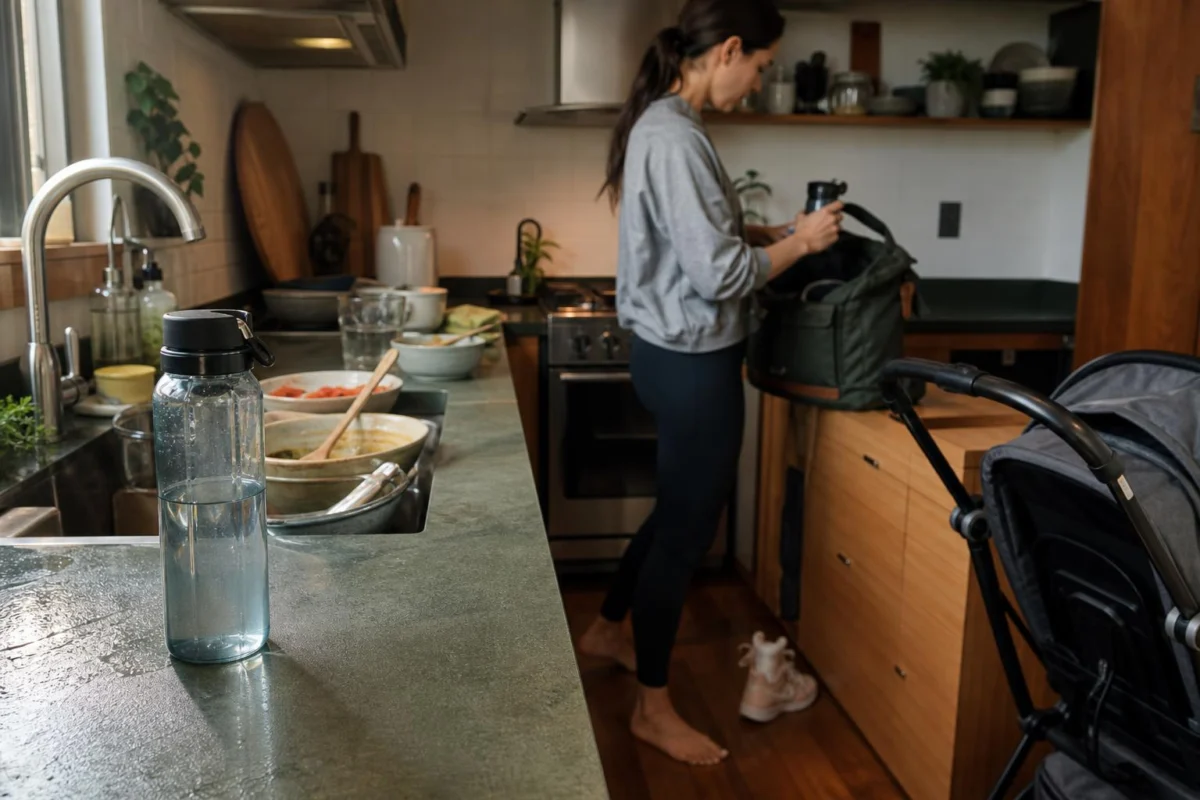
A filled water bottle can sit beside the kitchen faucet looking completely handled, then remain there after you have left. The problem is not filling it. The bottle has completed its kitchen job but has not joined the object that is actually going out the door.
A Simple Departure Cue for Your Water Bottle connects those two locations. Ask one question while the cap is still in your hand: What will carry me on this trip? Put the bottle with that backpack, tote, stroller, gym duffel, bike pannier, or car. The counter stops being its final stop.
How can the bottle join your trip before the morning gets busy?
- Start with one repeated outing. Pick a trip with a recognizable pattern: the work commute, school pickup, a regular gym visit, or a weekly class. A cue is easier to learn when the carrier and destination are familiar.
- Identify the thing that physically leaves with you. This may be a work backpack, a diaper bag, a tote, a stroller, a pannier, or the car itself. Name the actual carrier rather than a vague area near the door.
- Assign the bottle a travel position. Use an exterior pocket, a tall interior compartment, a pannier sleeve, or a vehicle cup holder. If the bag has no obvious pocket, select one section that can keep the bottle upright.
- Transfer it directly from sink to carrier. Fill the bottle, tighten the lid, and wipe off drips with a dish towel if needed. Then place it in its travel position before making coffee, packing lunch, or checking your phone.
- Check only for safe placement. Make sure the cap is secure and the bottle is not likely to leak onto a laptop, papers, spare clothes, or electronics. Move it if necessary, but leave unrelated bag contents alone.
- Let the carrier answer the departure question. Later, take the tote, push the stroller, load the car, or lift the backpack as usual. The bottle travels because it is already part of that object.
What does this look like on a work-from-office morning?
Marcus goes to his office on Mondays and Wednesdays. His laptop backpack rests on a chair near the dining table, and he usually fills a metal water bottle with ice after breakfast. For several weeks, the bottle has stayed on the counter while he grabs his badge, puts on shoes, and heads for the train.
He decides that on office days, the bottle belongs in the backpack’s side pocket. At 7:25, he fills it at the sink, screws the lid on, wipes the outside, and puts it in the pocket before returning to the table. His laptop goes into the main compartment later, so the bottle stays separated and upright.
On Saturday, Marcus is not commuting, so he leaves the washed bottle on the drying rack instead. The cue is tied to an office-bound backpack, not every occasion on which a bottle is cleaned or filled.
Why does moving it matter more than seeing it on the counter?
A kitchen counter holds many temporary things: breakfast dishes, mail, groceries, chargers, medication, and food waiting to be packed. A filled bottle there can look like something still in progress, something another person will use, or something that can be dealt with later. Its location does not clearly say, “Take this along.”
A backpack, stroller, pannier, and car serve a more specific function. They carry people and their belongings beyond the house. Once the bottle is inside or attached to that carrier, it no longer depends on a last-minute memory scan of the kitchen.
The method also separates preparation from transport. Water in the bottle means the drink is ready. A sealed bottle in the tote or cup holder means it is ready for the particular outing. Those are different states, and treating both as part of the task helps prevent the common gap between them.
Keep the arrangement ordinary enough to use on a rushed day. An insulated bottle may be fine in a side pocket; a bottle with a lid that has leaked before may belong upright in a cup holder or a more protected compartment. If the bag will be tossed into the back seat, consider whether the bottle will remain upright before relying on that location.
Questions about making the cue fit your day
What if I use my water bottle at breakfast?
Use it, then refill and close it after breakfast. Place it with the departure carrier as soon as you are done drinking, rather than returning it to the countertop.
What if I rotate between several bags?
Give each regularly used bag its own bottle position, such as a side pocket or one interior section. The shared rule is that the bottle moves into whichever bag serves today’s outing.
Can I prepare the bottle the night before?
Yes, if the bottle seals reliably and the bag will stay in a safe position overnight. Keep it upright where possible, especially if the bag contains electronics or papers.
What if I leave by car without carrying a bag?
Make the car the carrier and use a stable cup holder or secure storage area. Bring the bottle out with your keys, then set it down before starting the drive.
Other small routines for departure and home logistics
Finish where the bottle will travel
The useful endpoint is not a full bottle beside the faucet. For the outing you selected, the job ends when that bottle is sealed and riding with the backpack, tote, stroller, pannier, or car. It is no longer a kitchen item to remember; it is part of the trip.