
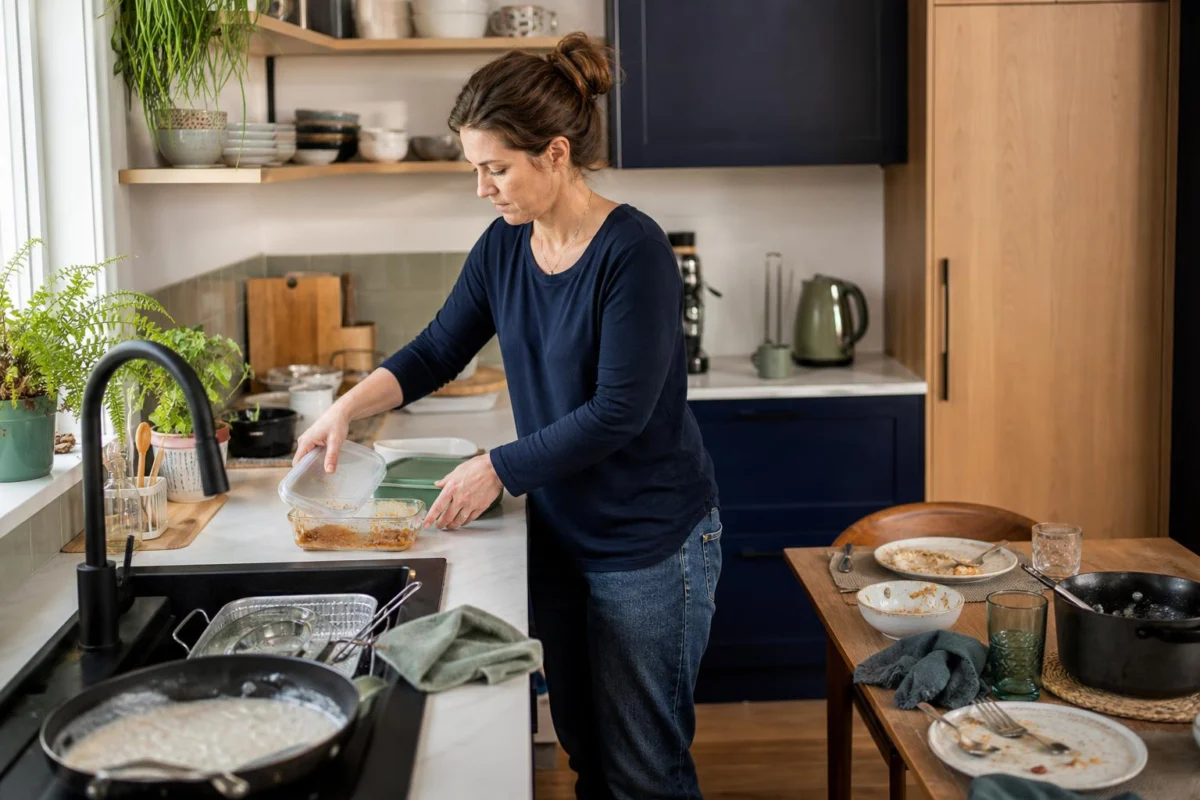
The decision avoided after dinner is rarely whether the kitchen is messy. It is whether touching the plates will lead to an hour of washing, wiping and noticing jobs that were not part of dinner at all. A saucepan on the cooktop and a half-cleared table can make walking away seem preferable.
A simple after-dinner reset corrects that all-or-nothing mistake. Deal with the items that become troublesome overnight, gather the rest into sensible places, and stop before the kitchen turns into an evening cleaning project. The aim is for tea-making, breakfast and sitting down to remain easy.
Recover the kitchen from the all-or-nothing decision
- Secure the food first. Portion leftovers into containers and refrigerate them. Return chilled items such as yoghurt, grated cheese, salad dressing and opened sauces to the fridge. Scrape away food that will not be saved into the bin or compost.
- Clear the eating places. Bring plates, bowls, glasses, cutlery and serving spoons from the table, lounge room or desk to the dishwasher or sink. If the dishwasher can take them, load it. If it cannot, keep the washing-up together rather than spread across several surfaces.
- Rescue the item that will be worse tomorrow. Look at the frying pan, roasting dish, colander or saucepan. Rinse stuck rice, add water to a sauce-coated pan, or wash one item if it will quickly become difficult. A hot pan can cool safely in a clear spot; it does not need to be handled immediately.
- Put dinner supplies back where they belong. Return the oil, salt, pepper, pasta packet, spice jars and sauce bottle that were used for the meal. Leave unrelated cupboards, drawers and bench clutter alone. This is only about ending the cooking setup.
- Restore two working surfaces. Wipe the dining table and the patch of bench needed for the kettle, toaster or morning lunchbox. Move mail, chargers and school papers away from food areas without trying to sort them.
- Check the exit points. Put packaging in recycling or rubbish, pick up obvious food scraps, and make sure the cooktop is off. Take out the bin only if it is full or unpleasant enough to affect the room tonight.
A Thursday night pasta recovery
At 7.35 pm, dinner has finished. Two pasta bowls and water glasses are on the table beside a homework sheet. The bench holds an open passata jar, parmesan, a colander and a saucepan with sauce drying around its rim. It would be easy to start on the cupboards while putting away the pasta, then feel trapped in the kitchen.
Instead, save one lunch portion in a container and refrigerate it with the parmesan and passata. Put the bowls, glasses and wooden spoon in the dishwasher. Fill the saucepan with warm water and rinse the colander. Return the oil and pasta packet, place the homework sheet beside the school bag, then wipe the table and the kettle corner. The saucepan can stay soaking. Breakfast has a table, the kettle is reachable, and no food has been left out.
Why a partial clear is often the right correction
After dinner, several different jobs arrive at once: storing food, washing dishes, cleaning cooking equipment, managing rubbish and dealing with whatever else landed on the table. The common mistake is to call all of it “the kitchen” and assume it must be completed in one stretch. That makes starting feel expensive.
Separating the work by consequence gives the evening a clearer order. Food is handled first because it should not sit forgotten on the bench. Dishes come next because their location matters even when they are not clean. Once cups and plates are in the dishwasher or at the sink, the table and lounge room no longer carry evidence of the meal.
The cooking vessel deserves a separate decision. Baked-on sauce, egg and rice can demand more effort later, so soaking or rinsing is a useful recovery step. Yet a saucepan that is still too hot to touch safely is not a failure waiting to happen. Put it somewhere stable, attend to the rest, and leave the actual washing until it suits the evening.
Limiting the wipe-down to the table and the next-used bench also prevents a drift into unrelated cleaning. Those surfaces have a direct job later tonight and in the morning. A splashback, oven door or cluttered pantry may still need attention another day, but they do not decide whether someone can make a cuppa or pack lunch.
After-dinner calls that can wait
Should the dishwasher run every night?
Run it when it is sufficiently loaded, clean bowls or lunch containers are needed in the morning, or it fits your household routine. Otherwise, loading what fits is still useful.
What happens if someone is still at the table?
Leave their plate and glass in place. Shared food can be stored and the cooktop area cleared without signalling that they must finish eating immediately.
Can washing-up stay until morning?
It can, provided food has been dealt with and dishes are contained. Rinse or soak the items likely to harden, smell or take much more effort later.
Do I need to sweep after every dinner?
No. Pick up a noticeable spill or food that could be trodden through the house, but ordinary crumbs can remain until the floor has a reason to be cleaned.
End dinner without adopting the whole kitchen
The useful stopping point is specific: leftovers are stored, dinner dishes have one destination, the difficult pan has been protected from tomorrow, and the table plus kettle space are available again. Leave the remaining washing-up there. Dinner has been properly put away without taking over the rest of the night.