
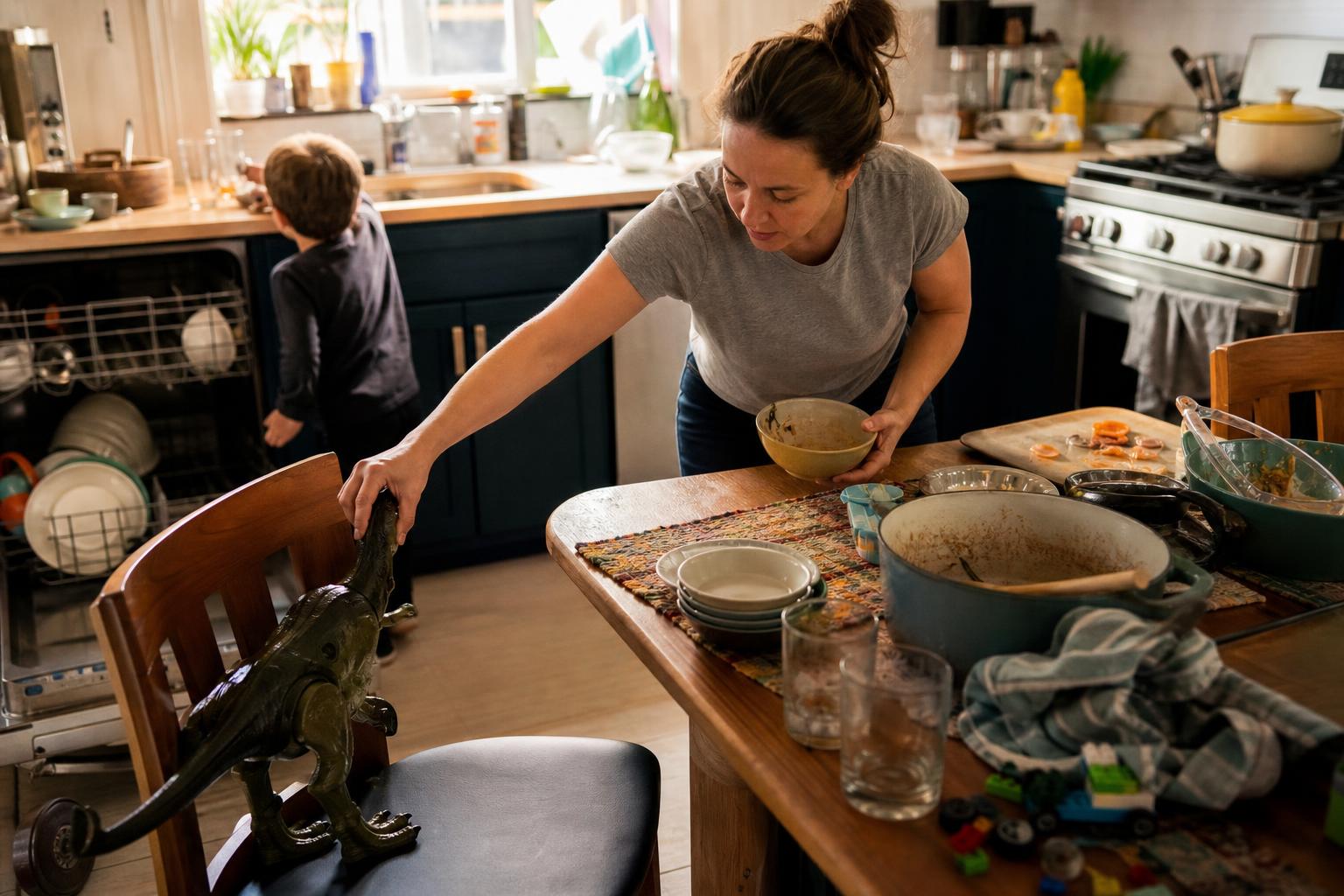
The toy causing trouble before dinner is rarely every toy in the room. It may be the plastic dinosaur occupying the only open chair, the train track crossing the kitchen-to-table route, or the bead kit spread across the place where bowls need to go. That object is the useful place to enter a five-minute toy reset before dinner.
Rather than announcing a room cleanup while food is cooking, follow the obstruction outward. Recover the seat, the part of the tabletop needed for dinner, and the path used to carry hot dishes. Toys can remain in other parts of the room if they are not interfering with this meal.
Trace the blockage back from the dinner table
- Identify the first item in dinner’s way. Stand at the table and name the problem in concrete terms: a chair covered in stuffed animals, a puzzle on the placemat area, or vehicles underfoot beside the table.
- Give that item a temporary landing place. Put familiar loose toys in their usual container. Move an unfinished build onto a tray, shallow box, sturdy board, or approved patch of floor where it can stay together through dinner.
- Test the chair and table. Pull out the chairs people will use. Clear enough tabletop for plates, cups, and the food you expect to serve; leave a large project alone if it sits beyond that working area.
- Walk the food route. Carry an empty plate from the kitchen counter to the table. Relocate anything you could step on or bump with a hot pot, including rolling cars, blocks, doll accessories, and loose craft supplies.
- Ask for one object-and-place job. A child can put crayons in the art bin, stuffed animals on the bed, or cars in the garage basket. Keep the request tied to the immediate obstruction rather than asking them to survey the whole room.
- Put dinner items down. Once the required seats, serving space, and route work, set out the plates or bring food to the table. Stop there.
A train set at the wrong end of the day
At 5:50 p.m., a wooden train loop covers one end of the dining table. The station, bridge, and several track pieces are still connected. Two engines and a handful of tiny passengers have fallen onto the floor near the chair closest to the stove. Dinner is nearly ready, and that chair is where your child normally sits.
First, slide a baking sheet or firm tray under the connected track and move the whole setup to a low shelf or a clear section of living-room floor. Put the two engines and passengers in the tray with it. Pick up the pieces near the chair, pull the chair out, and check the short route from stove to table. If the other half of the table is already free, set bowls there and serve. Searching for the missing tunnel piece or organizing the train bin belongs to a different job.
Why following one obstruction keeps dinner moving
Before a meal, toys create several different kinds of friction. Some take up a seat. Some occupy the surface needed for food. Others create an unstable walking route at the exact time adults may be carrying plates, a casserole dish, or a full pot. Looking for the item that blocks one of those functions makes the priority visible.
This also separates active play from abandoned clutter without requiring a big decision. A half-built castle or track can be worth preserving, especially if a child expects to return to it after eating. Moving the entire project as a unit is often faster than breaking it apart, matching pieces to bins, and later trying to reconstruct what was made. A temporary landing place is enough if it is stable and out of the meal area.
The order matters. Clearing a chair before arranging a toy shelf confirms that someone can sit down. Clearing the tabletop before collecting every item from the rug confirms that dinner has somewhere to land. Walking the route with an empty plate catches the low, rolling pieces that are easy to overlook from across the room.
Specific requests make it easier for children to join in. “Put the animal figures in this basket” gives a clear finish. “Clean up your toys” can mean many things, especially when play has spread through more than one area. Adults can take responsibility for fragile models, tiny parts, heavy containers, or any move that needs a safer location.
Handling the toy problems that interrupt dinner
What if the construction project cannot be moved without falling apart?
Clear the chairs and serving portion of the table first, then protect the project in its current spot if it does not affect those uses. Covering it with a tray or board can help signal that it is paused.
What if there is no tray or spare surface for an unfinished toy?
Use a shallow laundry basket, an empty box, or a corner of the rug away from foot traffic. Keep related pieces together so returning to the activity after dinner requires less searching.
What if my child refuses to stop playing for dinner?
Give a short warning tied to the meal, then offer a preservation step such as taking a photo or choosing where the project waits. You can still clear the necessary chair and serving route yourself.
Should I clear toys from the entire dining room before we eat?
No. Focus on the places dinner needs right now: the occupied seats, the food area, and the walking route. A toy shelf, play corner, or unrelated couch pile can wait until another part of the evening.
Serve dinner once the toy blockage is gone
A five-minute toy reset before dinner ends at a functional meal setup, not a spotless room. If the train has been parked, the chair pulls out, and the route can carry a plate safely, dinner has room to happen. Let the remaining toys stay for later.
For a later pass through shared spaces that gathers misplaced belongings without sorting each one immediately, try the one-basket evening pickup routine. More short family transitions are available in five-minute resets for parents.