
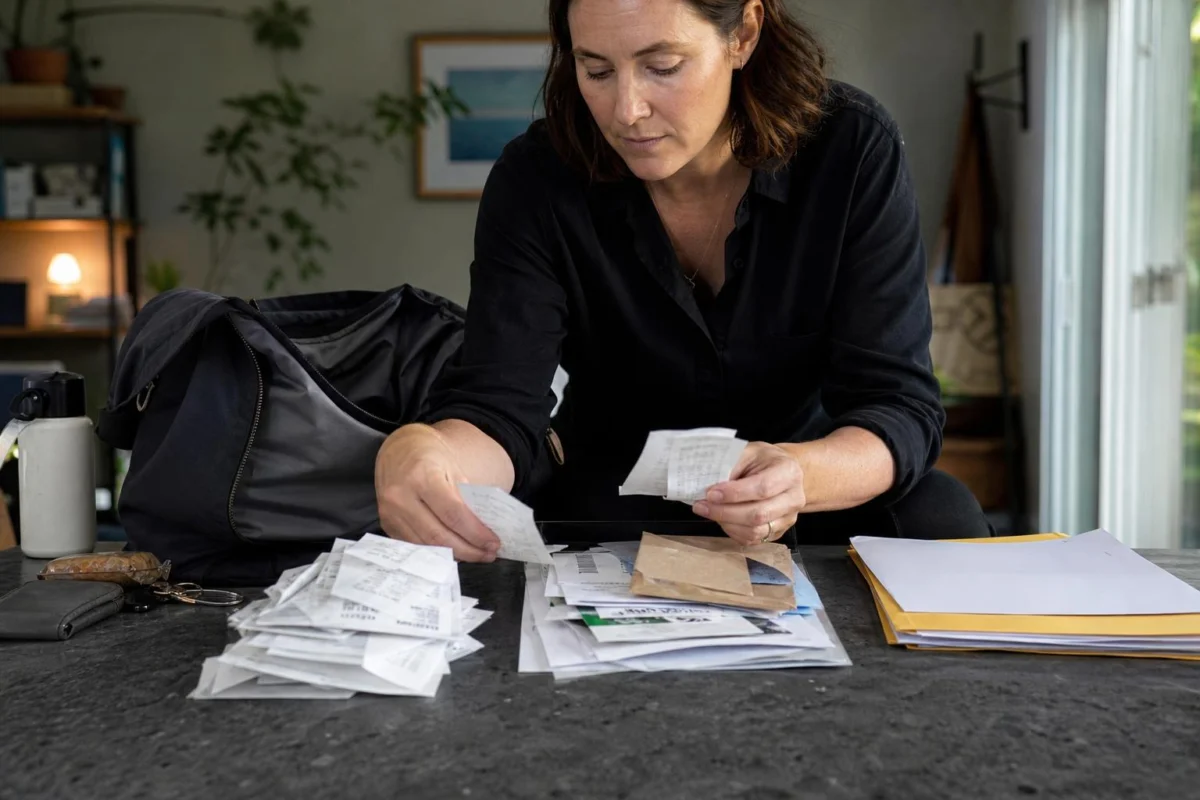
A bag gives fairly direct clues when it is no longer working: the zip catches on a crumpled receipt, a charger has wound itself around pens, the outer pocket holds an old muesli bar, or the bag feels heavier than the day ahead requires. Those small physical annoyances tend to show up at the worst point: while you are looking for keys, a travel card or an access pass at the door.
Tonight, use what is in the bag to decide what happens next. This is not a full clean-out or an attempt to create a permanently perfect bag. It is a short check for the objects that will help or hinder tomorrow’s actual trip, from the first place you are going to anything planned later in the day.
Follow the clues inside the bag
- Put the bag where you can see into it. Set it on a bench, chair or bed. Open the main compartment and the pockets you use most. Notice the first obvious source of friction: loose items, food residue, unnecessary weight, a missing essential or papers getting bent.
- Lift out yesterday’s leftovers. Remove rubbish, empty containers, damp clothing, receipts, old handouts and gear that has no place in tomorrow’s plans. Put rubbish in the bin and containers near the sink. Other items can sit beside the bag for now if they belong elsewhere.
- Pack from tomorrow’s first stop. Think of the first destination rather than every possible situation. For work, that may mean a laptop, charger, pass, notebook and lunch. For an appointment, it may be a letter, referral, payment card or glasses. Add what that destination specifically calls for.
- Give the small essentials an easy-to-reach home. Put keys, wallet, travel card, headphones, medication or work pass into the pocket you naturally check. Use a key clip or zipped section if your bag has one. Keep the location familiar rather than creating a clever arrangement you will forget by morning.
- Check what cannot be packed yet. Lunch may still be in the fridge, a laptop may be charging, or a rain jacket may be drying near the laundry. Place the relevant item beside the bag, or leave a plain visual cue where you will see it as you leave.
- Close it after one departure check. Feel the weight, check the bottle lid, and make sure nothing damp or sticky has been left against papers or electronics. Put the bag in its usual leaving spot once its contents match tomorrow’s plan.
A Wednesday bag for train, office and evening class
Imagine it is Tuesday night. Your tote has come home from a weekend outing with a paperback, two supermarket receipts, a half-full drink bottle and a folded jumper. Tomorrow starts with a train trip to the office, followed by an evening language class.
First, tip the receipts into the bin and take the book and jumper out. The bottle is emptied and left by the sink. Into the main compartment go the laptop in its sleeve, charger, notebook and the folder needed for the morning meeting. The travel card and office pass go into the small zipped pocket; they are the two things most inconvenient to hunt for at the station barrier and building entrance.
The language workbook is added because the evening class is a real plan, not a just-in-case extra. Lunch cannot go in yet, so the empty lunch container is placed beside the tote near the front door. The result is not a bag organised for every future day. It is a bag that suits Wednesday, with a visible prompt for the one item that must wait until morning.
Why working from the bag itself is enough
A bag becomes difficult gradually. A receipt slips into a pocket, then a spare cable, then something brought home from one errand and never removed. None of those items is necessarily a problem alone. Together they obscure the few objects needed quickly and make it harder to notice what is missing.
Starting with a physical signal keeps the check grounded. If the bag is unexpectedly heavy, look for heavy objects with no job tomorrow: duplicate chargers, a full drink bottle, coins, a book already finished, sports gear from a previous day or paperwork that can stay home. If it smells stale or feels sticky, inspect food containers and bottle lids before adding anything else. If papers are bent, separate tomorrow’s document from old notes and place it in a notebook, folder or laptop sleeve where it has some protection.
The next useful decision is based on timing. An item for a trip after work may belong in the bag; wet swimmers from this afternoon probably do not. This avoids two unhelpful extremes: carrying every possible item in case it becomes useful, or stripping the bag so bare that tomorrow’s planned activity is forgotten.
Familiar pockets also reduce the small search at the door. An outer compartment may be right for a travel card if you reliably use it there. A zipped pocket may suit medication or earbuds that otherwise drift to the bottom. There is no universal layout to copy. What matters is being able to name the location of the items you reach for under time pressure.
Some departure items cannot sensibly be packed overnight. Refrigerated lunch, a charging device, a child’s water bottle or a jacket still drying needs a cue, not a complicated system. Leaving the empty lunch container by the bag links the unfinished item to the object you will pick up. It turns a vague thought about tomorrow into something visible in the normal path out.
Questions that come up at the zip
What if the bag contains things I need to deal with later?
Take them out of tomorrow’s bag and place them in one visible spot nearby. A library book, return parcel or piece of paperwork can remain there until you are ready to act on it. The immediate job is separating it from the things you need to carry tomorrow.
Should I empty every pocket each night?
Usually, no. Check the pockets that are causing trouble or hold frequently needed items. A full empty is more useful after a trip, a spill, a busy week or when you genuinely cannot find what you need.
What if I use different bags for different days?
Set out the bag that fits tomorrow’s plan, then move across only the essentials and trip-specific items. Check its base and pockets first; an unused bag can still contain an old receipt, cable or forgotten snack.
Leave one bag ready for the morning
The stopping point is simple: yesterday’s obvious leftovers are out, tomorrow’s needed items are packed, and anything that must wait until morning has a visible cue beside the bag. Zip it, place it where you leave from, and let the rest of the household sorting stay separate. Tomorrow’s bag is ready to pick up without a rummage.