
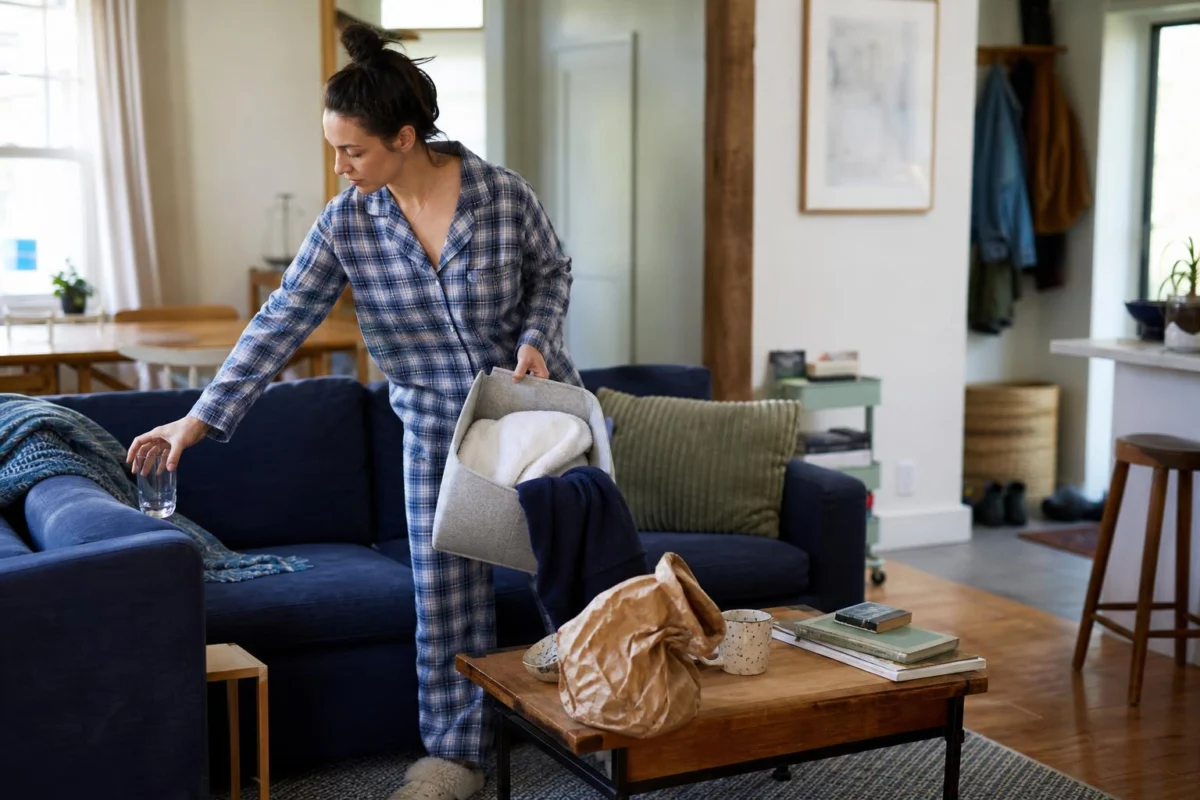
The soft shirt, sweatpants, or flannel pajama set is already on, and then you spot the glass on the arm of the couch, a damp bath towel, or a grocery bag still sitting on the countertop. Changing clothes has made the unfinished household item feel unusually out of place. Your body is ready for bed while the room seems to be handing you a new assignment.
Pajamas can serve as a clear household handoff. They do not mean nothing can be handled after dark. They mean a chore noticed after getting changed has to earn its way into tonight. Instead of following every item into another room or opening a cabinet because something caught your eye, make one contained decision: handle the overnight issue, set up a reminder for tomorrow, or leave it where it is.
Use a pajama checklist before touching the chore
- Look at the exact object that stopped you. Stay with the mug, lunch container, wet towel, trash bag, or package in front of you. Describe its immediate problem without adding nearby work. A full trash bag is one object; cleaning the whole kitchen is a different job.
- Ask whether leaving it creates a concrete problem by morning. Take care of safety concerns, an active spill, food that will spoil, something a pet needs, or an item essential for an early departure. A pile of mail, shoes that are slightly crooked, and folded laundry on a chair will usually be fine overnight.
- If it belongs to tonight, define the smallest finished version. Put leftovers into the refrigerator rather than reorganizing the shelves. Hang up the wet towel rather than starting a bathroom reset. Tie the trash and place it by the door if pickup is tomorrow, rather than collecting trash from every room.
- If it belongs to tomorrow, place one cue at tomorrow’s point of use. Put the library book in the bag you carry to the car. Set the empty coffee container beside the shopping list. Put a receipt needing attention near your wallet. Use a cue only for something with a deadline, a needed item, or a detail you are likely to lose track of.
- Apply the stop rule: once the named object is handled or cued, leave the area. Turn off the room light, put down the cleaning cloth, and return to brushing your teeth, reading, or sitting down. Do not scan the room for the next thing before you go.
A water refill that stays a water refill
At 9:40 p.m., you are in pajamas and walk into the kitchen to refill your water bottle. On the countertop are a takeout container with rice still in it, two coffee mugs, an unopened package that arrived that afternoon, and a paper towel near the sink. The dishwasher is clean, which makes unloading it seem tempting.
The rice is the overnight decision: move it into the refrigerator or discard it if it has been left out too long. The paper towel has a small puddle underneath it, so wipe that up and put the towel in the trash. The mugs are stable. The package can stay unopened. The clean dishwasher does not affect your water bottle, tonight’s safety, or tomorrow morning.
Fill the bottle. If you need the takeout container for tomorrow’s lunch, set it on the counter by the bottle after rinsing it; otherwise, leave no additional prompt. Then walk out with the bottle. Unloading plates, finding space for the package, and inspecting the sink are outside the decision you came in to make.
Why pajamas help break the add-on pattern
Many late chores begin as a reasonable response to something visible. You notice a cup and carry it to the kitchen. At the sink, you see dishes. The dishes point to the dishwasher. The dishwasher reveals a dish towel, a grocery list, and crumbs on the floor. None of those items is necessarily urgent, but each creates a fresh decision when your attention is already in household mode.
The physical change into pajamas gives that sequence a useful checkpoint. It separates chores you deliberately planned for the evening from work that appeared while you were on the way to bed. A planned load of laundry or a specific kitchen task may still fit your night. This article is for the surprise task that appears after you had already changed direction.
The overnight question keeps the decision grounded in consequences rather than appearance. Food on the counter, water on the floor, a medication bottle left within a child’s reach, or a dog bowl that needs filling have a reason to be addressed now. A cluttered entry bench or a dishwasher that could be unloaded may bother you, but visual irritation alone does not require a second work shift.
A single physical cue solves a common reason chores keep pulling at you: fear that an important detail will disappear by morning. Put the object near the moment it will matter. A return label belongs with the package and the bag you use to leave home. A school form belongs with the backpack. A nearly empty soap dispenser might sit beside the grocery list. The cue carries the reminder without making you write down every ordinary loose end.
The stop rule matters because completion can be hard to recognize late at night. If the rule is “make the kitchen better,” there is always another cupboard, dish, or surface available. If the rule is “refrigerate the rice and wipe the spill,” the endpoint is visible. Leaving the room after that endpoint prevents the original task from turning into a tour of everything unfinished.
Questions to ask after the pajamas are on
What chores actually belong to tonight?
Handle tasks involving immediate safety, pets, food storage, an active mess, strong odors, or a definite morning need. The reason should be specific enough to explain why waiting until tomorrow would cause trouble.
What if I intentionally like doing chores late at night?
That can work well if you decide on the chore before changing clothes and know its endpoint. This approach is for accidental chores that appear while you are already settling in.
What if the visible mess will keep bothering me from bed?
Reduce the distracting part without opening a larger task. Stack dishes neatly beside the sink, close the laundry-room door, or place loose items in one basket, then leave the sorting for daylight.
Should I make a list of every task I notice?
No. Lists are useful for deadlines, required purchases, and details likely to be forgotten. Recording every mug, jacket, or stray paper can turn a brief sighting into a larger evening workload.
Let getting into pajamas close the household loop
Pajamas will not make the cup, the laundry basket, or the package disappear. They can keep each item from automatically becoming the first link in a longer chain of chores. Address the true overnight need, put one important tomorrow item where it will be seen, and leave the rest of the room for another time.