
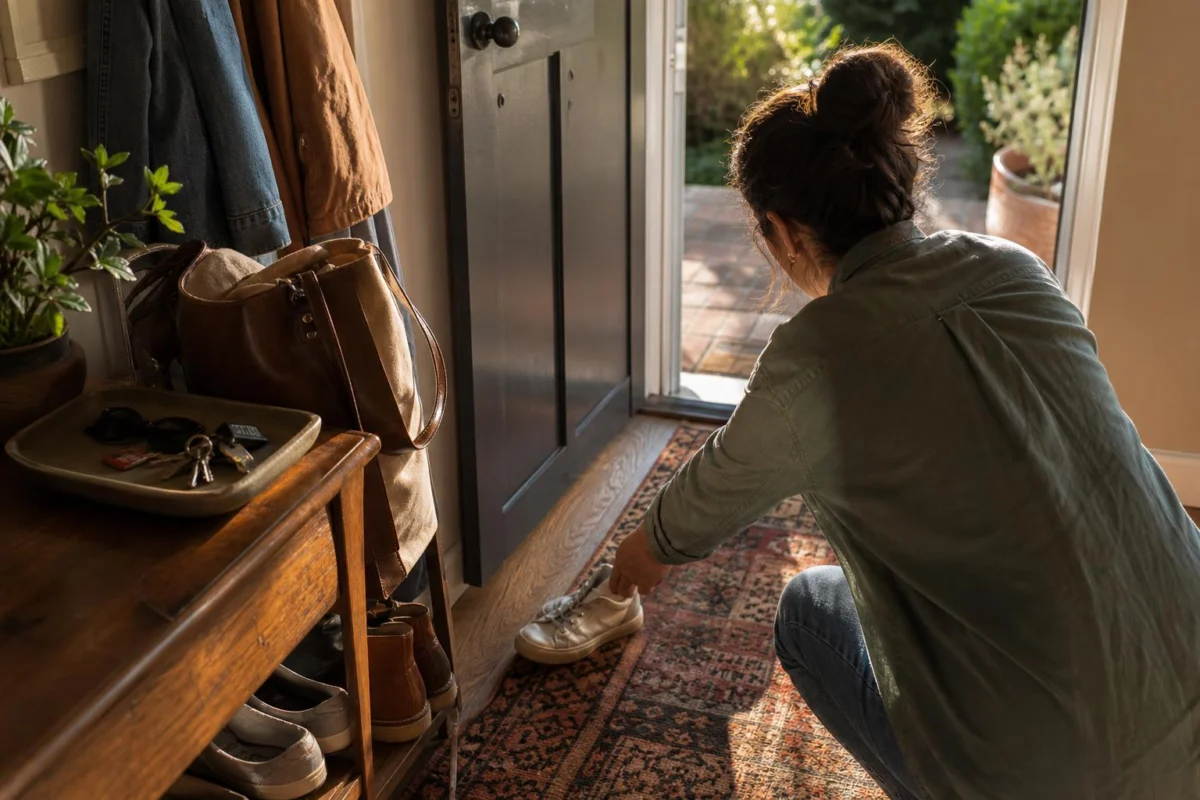
A sneaker wedged against the front door is a useful place to begin. It is not merely clutter: it can stop the door from opening fully, make a grocery bag harder to carry inside, and invite the next coat or backpack to land on top of it. For this five-minute entryway clear, move the object that is physically in the way before looking at the rest of the room.
The goal is a front door that swings, a threshold that is easy to step over, and a route into the home that does not require looking down. A narrow hall, apartment landing, mudroom, or open front-door corner can all benefit from the same low-energy approach: deal with what touches the path, then give nearby arrival-and-departure items a workable place.
Begin at the blocked door and work outward
- Clear the door swing. Open the front door as far as it normally goes. Move the shoe, package, umbrella, tote, or other object it meets. Put that object in its usual spot if it is close; otherwise set it in one carry-along basket or bag.
- Make one walking strip. Stand just inside the door and clear a strip toward the next room. Pick up floor items first: shoes, sports gear, reusable bags, delivery boxes, and loose clothing.
- Park the current travel gear. Hang the coat worn today, place the current bag on a hook or shelf, and put the shoes likely to be worn next in a rack, tray, or lined-up spot beside the wall.
- Separate true outgoing items. Put a labeled return, library book, or item promised to a neighbor together in one visible departure spot. Leave out only things attached to an actual upcoming trip.
- Contain what belongs elsewhere. Put stray water bottles, receipts, unopened mail, toys, and room-specific items into the basket. The basket may remain for now; the floor and threshold come first.
What this looks like on a tired weekday evening
You arrive with a raincoat, a canvas grocery bag, and wet sneakers. Inside the door are yesterday’s sandals, a child’s backpack lying open, a flattened-looking shipping box, and a library book that needs to go back Saturday. Start with the sandals because they are stopping the door. Slide them to the shoe tray. Put the backpack on its hook without reading the worksheets, stand the box against the recycling wall if it is out of the route, and hang the raincoat. Set the library book in the outgoing tote. Put the grocery bag and loose papers into the carry-along basket.
At that point, the sneakers can come off without joining a heap, someone can carry dinner through the doorway, and the library book has not vanished under mail. The box can be broken down later. Nothing requires a full decision tonight.
Why the threshold comes before the tidy look
An entryway is a traffic zone rather than a display surface. Its job is to let people arrive with bags, leave with keys, bring in packages, take out trash, and pass each other without stumbling. Items on a console table may look untidy but cause little trouble. One boot in the door swing can create an immediate daily snag.
Starting with the object causing friction lowers the number of choices. Instead of asking where every item in the entry should live, you first ask whether it blocks the door or walking route. That answer is usually obvious. Clearing in a short outward sweep also prevents an easy task, such as straightening a scarf, from pulling attention toward a larger closet or laundry project.
The departure spot has a separate purpose. A return with its receipt, a library book, or a package with a shipping label needs to be seen on the way out. A sweater that might be returned, random mail, or a bag that has been sitting for weeks does not need that valuable space. Keeping the outgoing group small makes it more likely that the doorway remains usable rather than becoming a long-term holding area.
For a low-energy pass, containment is enough for objects whose homes are elsewhere. A basket is not a final organizing solution; it is a way to stop a scattered entryway from interrupting the next arrival. Leave it where it will not narrow the route, and take it along when you next walk toward the rooms where its contents belong.
Questions that come up at the front door
What should stay near the door after I clear it?
Keep only items used in the ordinary act of arriving or leaving, such as current shoes, keys, a daily bag, seasonal outerwear, or a dog leash.
What if every pair of shoes is left in the entryway?
Keep the pairs currently in regular use near the door only if they fit outside the walking strip. Move occasional, out-of-season, and spare pairs to bedrooms or closets.
Where should a package going back to a store go?
Place it in one outgoing tote near the exit once it has a label or a specific next errand. Otherwise, move it to a decision spot elsewhere.
What if my entryway has no closet or bench?
A wall hook, shallow shoe tray, and small basket can handle the immediate flow. The important part is preserving the door swing and floor route.
Stop when the door works like a door again
Finish once the front door opens fully, the first few steps inside are clear, and today’s coat, bag, and shoes are off the floor. The basket, box, and deeper sorting can wait. This five-minute clear has done its specific job when coming home and heading out no longer begin with stepping around a pile.