
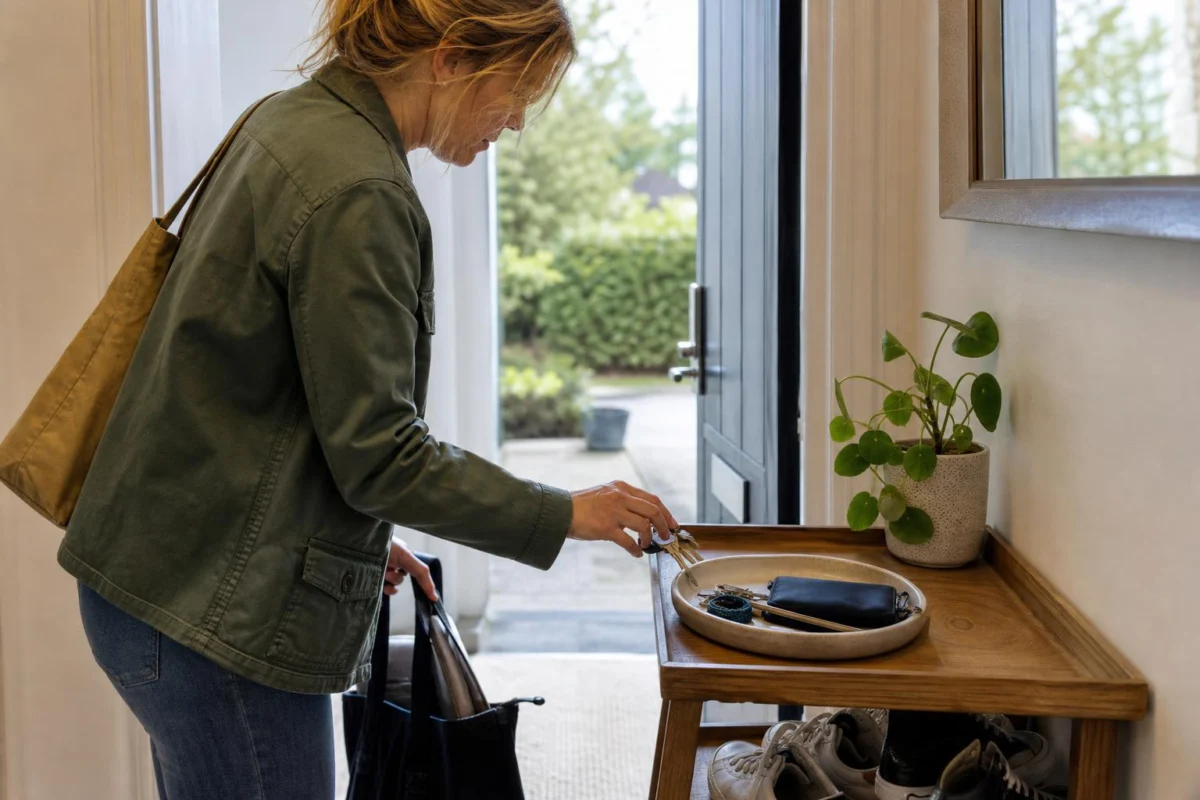
The awkward decision arrives just as you are ready to leave: should you go back in for something, or is it only a vague feeling that you have missed something? With shoes on and a hand near the lock, that uncertainty can send you from the hallway to the kitchen, bedroom and desk, picking up distractions along the way.
The Two-Minute Doorway Routine Before You Leave gives that moment a fixed route. It uses the objects at the exit to answer one question: what has to cross this threshold for the particular trip you are taking? It is not an entryway tidy, a full-house inspection or a way to prepare for tomorrow.
Trace your exit from keys to lock
- Stop where you would normally put on shoes. Keep your bag, jacket or other carry item with you. Starting at the same physical point makes the check easier to remember during a rushed morning.
- Confirm the access items. Find your keys first. Then check the item that gets you through the next door or onto the next service: wallet, bank card, Opal card, work pass or car keys. Put each item in its usual pocket or bag compartment rather than holding it while you keep thinking.
- Lift the bag and name its job. Is this a work bag, a gym bag, a child’s outing bag or simply a small shopping trip? Its purpose points to the one or two contents that cannot be substituted: laptop, lunch, prescription, sports shoes, library books or a return parcel.
- Look out through the doorway. Check the weather and the immediate trip. Take a raincoat, umbrella, hat or water bottle only if it suits where you are going and how long you expect to be out.
- Deal with one visible departure item. If a labelled parcel is beside the mat, a form is clipped to your bag, or a tote is hanging on the handle, decide whether it belongs to this trip. Put it inside the bag or leave it where it is. Do not start gathering a new collection of possible extras.
- Open the door and go. If you have a specific concern, such as a saucepan still on the cooktop or the dog shut away from its water, attend to that one concern. Otherwise, lock up and leave rather than beginning another circuit of the house.
A weekday appointment with one essential paper
You are leaving for a 10.30 am appointment after working from home. At the front door you have your handbag and umbrella, but feel tempted to walk back to the study because something may be missing.
Start with the objects in front of you: keys are in the side pocket, phone is in your hand, and your wallet is in the bag. The appointment letter is the item that matters for this outing, so you check the clear patch beside the shoe rack where you put it after breakfast. It is there. Slide it into the handbag, take the umbrella because rain is visible outside, and leave.
The notebook on the dining table, the recycling waiting near the back door and the clean washing in the laundry are not part of the appointment. They may still need attention later, but none changes whether you can get through the clinic door on time.
Why the doorway is a useful decision point
The last moments before leaving can make every unfinished thing feel equally urgent. Your eyes catch a coffee cup, a charger, an unopened letter and a jacket on a chair. A broad mental question such as “Have I got everything?” does not sort those things by consequence, so it can lead to a longer and less useful search.
Objects near the exit narrow the field. Keys indicate access. A phone and payment or travel item cover the basic movement of the trip. The bag indicates what sort of day or errand is ahead. The weather outside settles the question of an outer layer more quickly than trying to remember a forecast from earlier.
There is also a difference between an item that is required and an item that would merely be handy. A building pass, referral, medication or parcel with a lodgement deadline can alter the trip if left behind. Headphones, a second tote bag or a book may be pleasant to have, but are usually not worth delaying departure to locate. Making that distinction at the doorway keeps small preferences from disguising themselves as essentials.
A few visible homes can support the routine without turning the hall into a storage project. Keys might live in a dish near where they are usually dropped. A bag can have a hook, while a narrow spot beside the door holds an umbrella or a parcel that must leave that day. The arrangement only needs to show you what is waiting to go out. It does not need matching containers or a large entry cabinet.
If the same item causes repeated turns back, alter its location for the next departure. Put the lunch container beside the packed bag after it has cooled, keep the work pass with the laptop, or place the return item beside your shoes once it is ready. One changed landing spot is often enough to remove the recurring snag.
Questions at the threshold
What if I am already late?
Reduce the check to keys, phone, the access or payment item, and the one bag or document the trip depends on. Make the weather call as you open the door. Optional items can stay behind.
Should I check appliances and windows every time?
Respond to a particular thing you have noticed, such as an active cooktop, running tap or window open during a storm. This routine is not designed as a room-by-room safety inspection.
What if I do not leave through the front door?
Use the exit you actually take: garage door, side gate or apartment lift lobby. Keep the key objects and the trip-specific item close to that route where possible.
Let the lock be the last step
Before leaving, settle the access items, identify what this trip genuinely requires, and collect the one visible extra that belongs with it. Once the door opens, the decision is complete. The rest of the house can remain as it is while you get on with where you are going.