
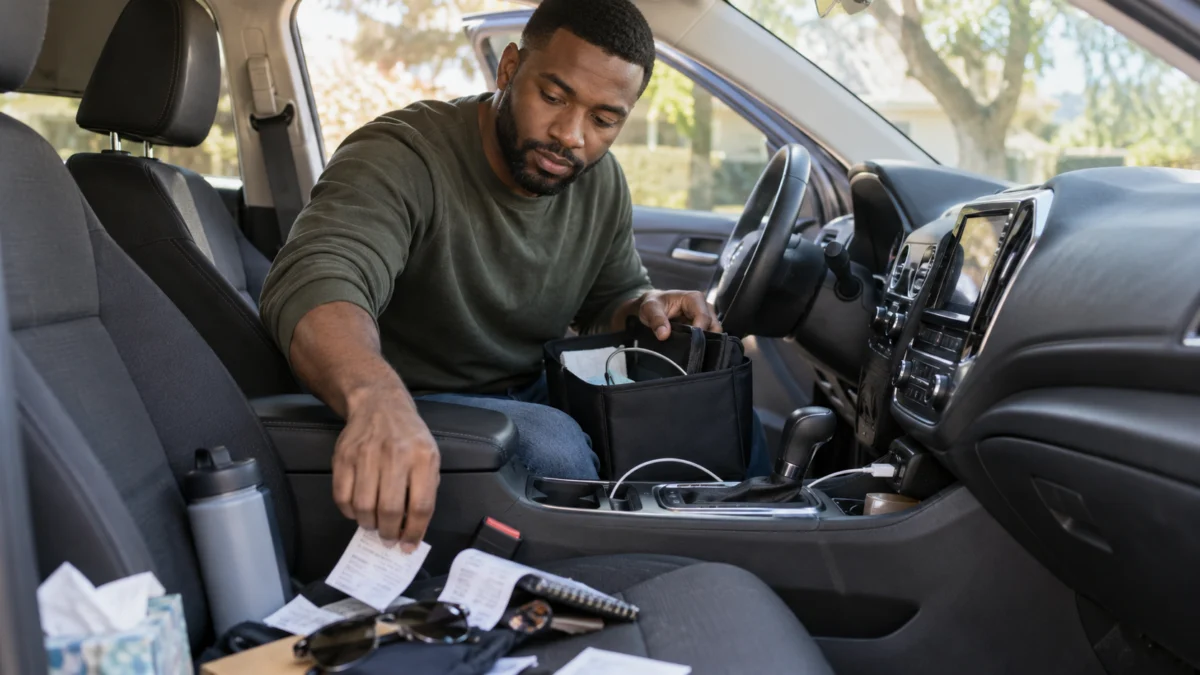
A loose bottle, toy or packet near the pedals changes what this reset is for. Before the cup holders, shopping bags or boot, deal with anything that could shift into the driver’s footwell on the next trip.
This five-minute job starts after you park, while the day’s objects are still where they landed: a takeaway cup in the console, a jacket on the passenger seat, receipts by the gear selector and snacks in the back. The aim is not an immaculate interior. It is a car you can get into tomorrow without clearing a place to sit or wondering what is underfoot.
Five minutes from pedals to boot
- Minute one: open the driver’s door and clear the footwell. Pick up anything loose around the pedals, beneath the seat or beside the centre console. Bottles, food packaging, coins, children’s toys and a stray shoe belong in your hand, rubbish bag or carry-in bag, not where they can roll about. Take used tissues, empty cups and old parking slips out as well.
- Minute two: deal with the driver’s seat and door pocket. Put your work lanyard, lunch container, mail or shop purchase into the bag going indoors. Keep the items that genuinely support driving where you normally find them, such as sunglasses, a parking pass or a car charging cable. If a receipt is needed for a return or claim, place it in your wallet or work bag now.
- Minute three: clear the passenger seat for a person. Lift off the cardigan, tote, pharmacy bag, library books, parcel or reusable bags that have accumulated there. Bring indoors anything with an obvious home. For objects needing a later decision, such as a return parcel or paperwork to read, group them in one bag and take that bag inside rather than rebuilding the pile on the seat.
- Minute four: collect the obvious middle and back-seat leftovers. Check cup holders, the console and reachable door pockets. Then turn from the front seat and gather loose snack packets, drink bottles, wet swimming gear, school hats or shopping bags from the back. Prioritise anything that may leak, smell, become damp or occupy someone’s seat.
- Minute five: make one boot decision and close up. Open the boot only for a clear reason: remove a grocery bag, take in a box that arrived home days ago, or contain smaller loose gear. Leave regular travelling equipment, such as a first-aid kit, windscreen shade or pram, where it is secure. Put rubbish in the bin and carry the indoor items through the door.
A driveway reset after swimming lessons
You arrive home at 6.15 pm with wet goggles on the back seat, a half-finished drink in the rear door, a muesli bar wrapper near the handbrake and your child’s trainers partly under the driver’s seat. Start with the trainers and wrapper, because neither should still be there for the morning drive. Put the goggles and drink bottle in the swim bag, then take the swim bag indoors.
The passenger seat holds your handbag, a supermarket bag and a jumper. Your handbag can come with you; the supermarket bag goes inside; the jumper goes over your arm. There is also an unopened parcel that needs a return label. Put it in one carry-in bag by itself and leave it beside the front door once inside. The boot can stay as it is, apart from taking out the bag of damp towels. At the car door, check that the pedals are clear and the passenger seat is available. That is enough for this visit.
Why this order suits a parked car
Car clutter is awkward because it spreads across several small zones, each with a different consequence. Something near the pedals can affect the next drive. Something on the passenger seat makes an ordinary lift or school run less straightforward. A forgotten food container can become unpleasant by the time you find it again. Starting at the driver’s door puts the most immediate issue first.
Working in a short physical route also prevents the car from becoming a sorting project in the driveway or car park. You are not pulling everything from every compartment to decide where it belongs. You are making three quick distinctions: rubbish leaves, household items come inside, and genuine car gear stays put.
The passenger seat gets its own minute because it often becomes a temporary shelf. Clearing it does not mean it must remain empty at all times. A work bag may travel there each day. What matters is whether an item is still in transit or has simply been left there after its trip ended. A grocery bag, wet uniform or borrowed book has reached home and can move on.
The boot is deliberately last and limited. It is sensible storage for bulky or regular equipment, but it can also hide delayed unloading. Looking there only for one obvious removal protects the five-minute scope. Vacuuming mats, untangling cables, checking every compartment and sorting sports gear are worthwhile only when you have set aside time for those particular jobs.
At the end, the visible result may be modest: fewer loose items, a clear driver’s space and one free seat. Those changes are tied directly to the next time the car is used, which is the point of stopping here.
Questions before you lock the car
What should stay in the car?
Keep items that regularly serve the car or its passengers and have a stable place: a charging cable used there, a windscreen shade, first-aid kit, reusable bags or a pram if it is used often. Avoid storing valuables, work papers, laptops or loose items that do not need to travel.
What if the back seat is full of children’s or sports gear?
Do not sort ownership or reorganise all the equipment during this reset. Remove food, drinks, wet gear and loose pieces that could move around. Put uncertain small items into one bag to bring inside, or place them together securely in the boot.
Should I clean the car during these five minutes?
Only if cleaning is the direct answer to an immediate issue, such as wiping up a fresh spill. Crumbs, dusty mats and a full interior clean are separate tasks. This reset is about clearing the next entry and drive.
Leave tomorrow’s seat and pedals ready
Lock the car once the driver’s footwell is clear, loose rubbish is out and the passenger seat can take a person or the next useful bag. The boot, seats and mats may still need attention another day. For now, the car has stopped carrying today’s leftovers into tomorrow’s trip.