
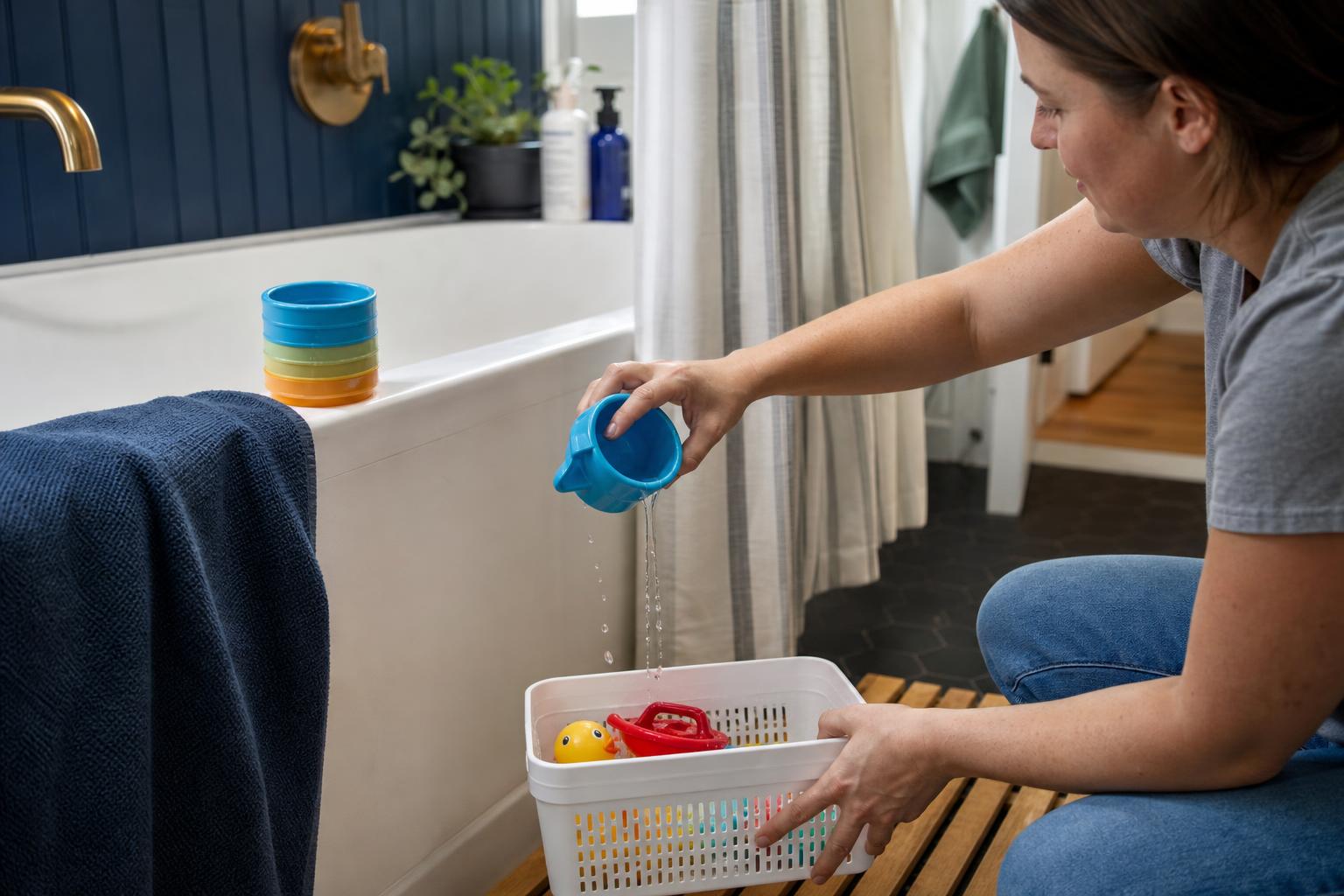
A dripping stacking cup on the tub edge is the real bath-toy storage problem. It is easy to toss that cup, a rubber duck, and a plastic boat into a bin, but the water they carry with them still needs somewhere to go.
Start with the wettest object rather than shopping for an organizer. The aim of this five-minute fix is to empty toys that hold water and place the whole small collection where it can drain and get airflow after bath time.
What should happen to wet toys right after the bath?
- Wait until bathing is over. First get your child safely out of the water and appropriately supervised. Then collect bath toys from the tub, ledge, and nearby floor or countertop.
- Tip out the toys that collect water. Turn over cups, boats, buckets, and anything else with an open cavity. Check toys with tiny openings for trapped moisture or visible damage.
- Sort out one problem toy. Set aside a toy with suspected internal mold if it cannot be adequately cleaned and dried. Follow the manufacturer’s cleaning instructions for toys you plan to keep.
- Put the remaining toys in a draining spot. Use a clean perforated basket, a suitable drying rack, or an existing bath-toy holder. Keep dripping toys out of a closed plastic box.
- Loosen the pile. Arrange the toys so water can escape and air can reach more than the outer layer. If the holder is crammed, store a few already clean, fully dry toys elsewhere for another day.
- Leave the bathroom safe for its next use. Hang towels where they can dry, wipe up water on the floor if needed, and make sure the tub has drained. The toys can stay in their drying location.
What does this look like on an ordinary bath night?
After a bath, you lift out two stacking cups, a small plastic sailboat, three foam letters, and a squirting fish. Water runs from the blue cup and the boat, so you turn each upside down over the tub. The fish has a small hole and seems to retain water, so you set it on the counter to inspect later rather than adding it to the group.
You place the cups, boat, and letters in a clean basket with holes near the tub, leaving the boat on its side instead of wedged under the cups. The bathmat is hung up, the puddle by the tub is wiped, and the tub is empty. That is the finish: the toys are contained in a place designed to let them dry, not sealed away while still wet.
Why does drainage matter more than hiding the toys?
Bath toys have two separate needs: getting out of the way and losing the water left from play. A solid storage box can handle the first need while working against the second. Water collects at the bottom, and toys pressed together have fewer exposed surfaces.
A holder with openings changes the job from “put everything away” to “give water an exit.” It does not have to be a special bath product. An ordinary plastic basket with drainage holes can work if it sits securely in an appropriate place, is easy to wash, and does not create a hazard in the bathing area.
Airflow also depends on how many toys are beside the tub. A basket large enough to contain a giant heap may still leave the center wet. Keeping a smaller working set in the bathroom gives cups and boats room to drain. Fully dry toys can wait in separate storage until they rotate back in.
Some toys make the system harder because water can enter a narrow opening and remain inside. More storage will not solve that particular issue. Regular inspection for trapped moisture, visible mold, and damage helps you notice toys that need cleaning according to their instructions or replacement because they cannot be adequately cleaned.
Bath toy storage details that can change the setup
Can bath toys stay in the bathtub?
They can stay in a suitable drying location in or near the tub when water can drain, air can circulate, and the area remains safe and accessible.
Is a mesh bath toy bag enough?
A mesh bag can be useful when it drains well and can itself be cleaned and dried. Check that toys are not packed together in a damp bundle.
What if I do not have a bath toy organizer?
Use a clean plastic basket with drainage holes or a suitable drying rack you already own. Prioritize stable placement, easy washing, water escape, and airflow.
How often should bath toys be checked?
Inspect them regularly for retained water, visible mold, or damage. Clean toys according to manufacturer instructions, and replace individual toys that cannot be adequately cleaned or dried.
End bath time with the water headed out
The useful stopping point is not a perfectly arranged bathroom or completely dry toys in five minutes. It is an emptied tub, a safer floor, and wet cups and boats resting in a place where their water can drain instead of sitting in a closed, damp container.