
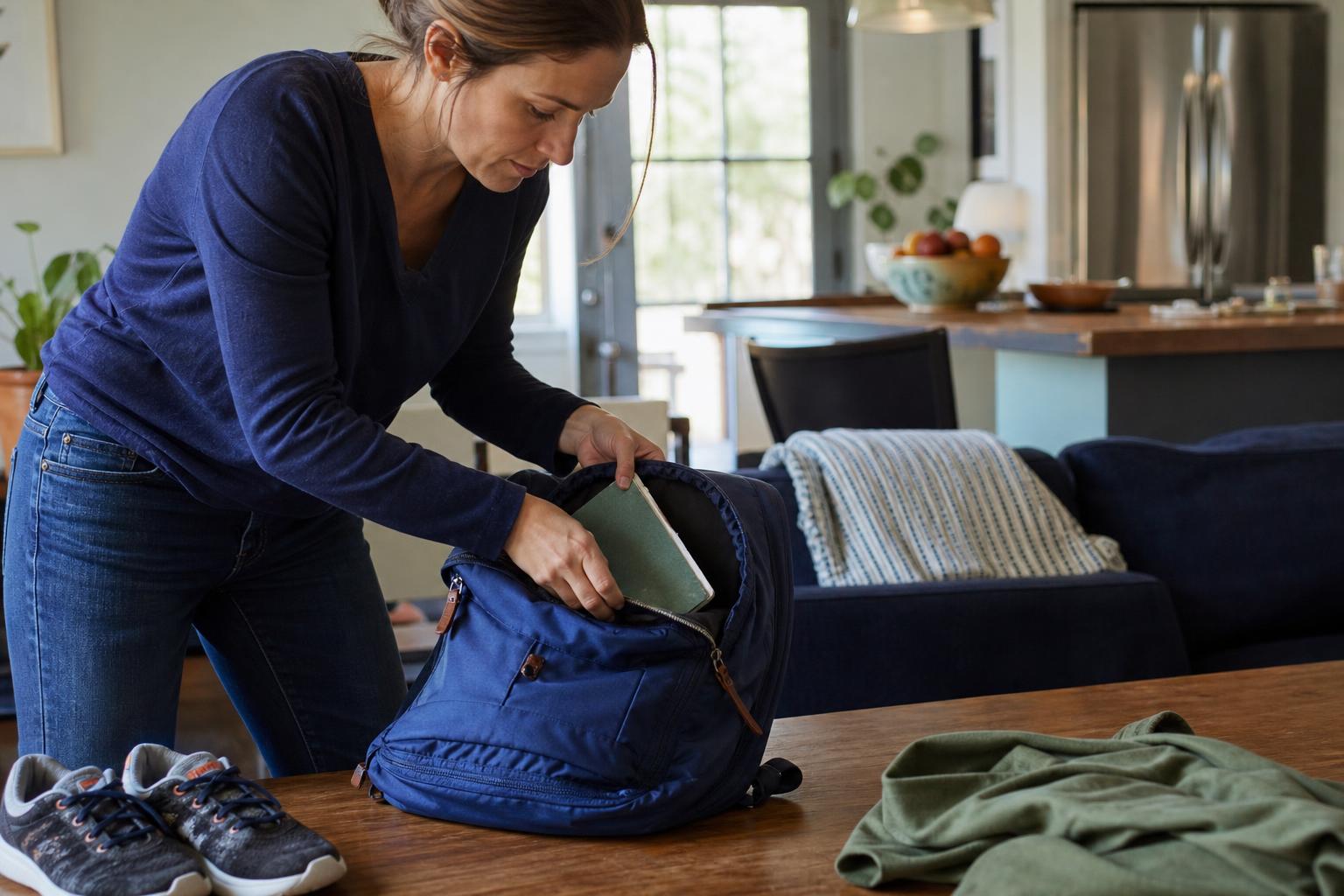
Tomorrow’s school morning can get stuck on one small exception: the library book still on the couch, a permission slip under a stack of mail, or sneakers that are still damp from practice. Start with the item you can already see. Putting that one thing where it belongs creates a visible sign that tomorrow is partly handled.
This five-minute reset is for the night before a regular school day, with attention on what makes tomorrow different. It is not a full packing session, a weekly calendar review, or a repeat of the last-minute check at the door. The job is to notice an exception, make one or two decisions now, and give the morning a clearer handoff.
Run a short handoff from tonight to the school door
- Read only tomorrow’s information. Look at the school calendar, teacher message, paper notice, or family planner. Check for library day, gym, an early arrival, an instrument, a signed form, or a special event. Leave the rest of the week alone.
- Begin with the first item in sight. If the library book is on the coffee table or the field-trip form is on the countertop, handle it before searching for anything else. Put it in the backpack, folder, or designated leaving spot.
- Say the handoff out loud or write it down. Use a plain sentence: “Tomorrow needs the blue folder and rain jacket; both go by the backpack.” This turns a vague concern into a specific next-morning cue.
- Check the bag for the unusual requirement. Confirm that the backpack is available and that the school-specific item is inside it. If an item cannot go in the bag, place it directly beside the bag rather than on a nearby surface.
- Set out one clothing answer. Check the forecast and any school requirement, then put out the needed layer, clean gym clothes, or uniform piece. Do not pull every possible outfit from drawers.
- Leave the departure area readable. Keep the bag, outerwear, and any carry-by-hand item together near the usual exit. Stop after the items for tomorrow have one obvious place.
A Thursday library-day handoff
On Wednesday night, a parent sees the school calendar note: library books are due Thursday. The book is face-down on the living-room shelf, while the backpack is hanging on a dining-chair back. The parent puts the book in the backpack, checks that the blue library folder is in its pocket, and moves the backpack to the front-door bench. Rain is expected, so a rain jacket goes over the bench arm. The note for Thursday now reads: “Book in bag; jacket at door.” There is no need to review Friday’s spelling list or reorganize the entire school-paper pile.
Why the exception deserves attention before bed
Ordinary school mornings already contain fixed steps: getting dressed, eating, brushing teeth, finding shoes, and getting out the door. Those steps move more smoothly when they are familiar. What slows them down is usually an exception that requires memory and a search at the same time.
A library book, signed slip, cello, team shirt, or weather layer may be easy to deal with at night because the house is quieter and the relevant object can be placed deliberately. In the morning, that same object can be hidden under a blanket, left in a different room, or remembered only after everyone has coats on.
Starting with something visible matters because it gives this reset a definite entry point. Instead of surveying backpacks, closets, school apps, and countertops all at once, you move one clear item toward its next use. The short handoff sentence then records what was decided without creating a long checklist.
Adults can handle deadlines, safety-related details, and school communications, while children take age-appropriate parts of the routine, such as putting a book into a bag or choosing between two clean shirts. The aim is not for one person to control every morning detail. It is for tomorrow’s exception to have a known place before the household starts moving.
For an everyday bag routine that is separate from school-specific preparation, see a simple bag reset before tomorrow.
School-morning questions for the night before
What if there is nothing unusual on tomorrow’s schedule?
Check that the backpack can be found, then leave it in the usual departure spot. A basic clothes decision is enough when no form, special equipment, or schedule change needs attention.
What if a school message arrives after this reset?
Read the message once and act on it if it changes the next morning, such as an early dismissal, required item, or weather instruction. Otherwise put the date in the planner for a later check.
Should lunch be packed during these five minutes?
Only if lunch is the specific missing item you noticed for tomorrow. Follow your household’s existing food-storage routine rather than adding broad meal preparation to this school-morning handoff.
What if my child cannot find something they need?
Start with the likely place and the item’s next destination, such as a recorder going beside the backpack. Avoid opening every drawer unless the missing object is genuinely required tomorrow.
Leave tomorrow with one clear school cue
Finish when tomorrow’s unusual school item has been found, placed with the backpack or departure area, and paired with any needed clothing layer. That visible arrangement is the stopping point: in the morning, the household can follow it instead of reconstructing the plan from memory.